· 6 min read
Instagram wants to tell creators what to post. What happens when everyone takes the advice?
Instagram’s Edits app can now analyze performance and suggest ideas, hooks, captions, audio and scripts. It sounds like creator support. It also gives the platform a new role: coach for the content that feeds its own algorithm.
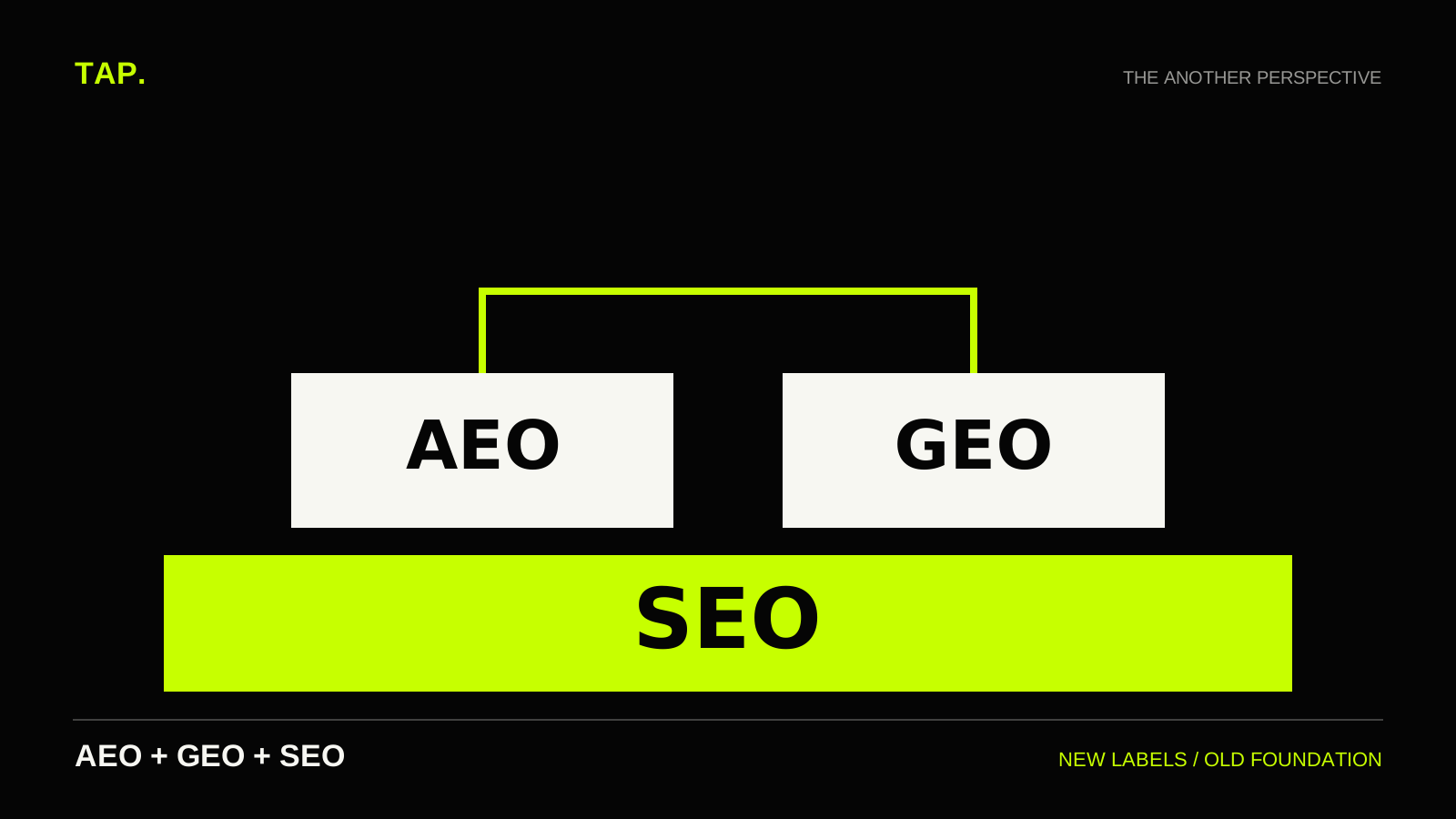
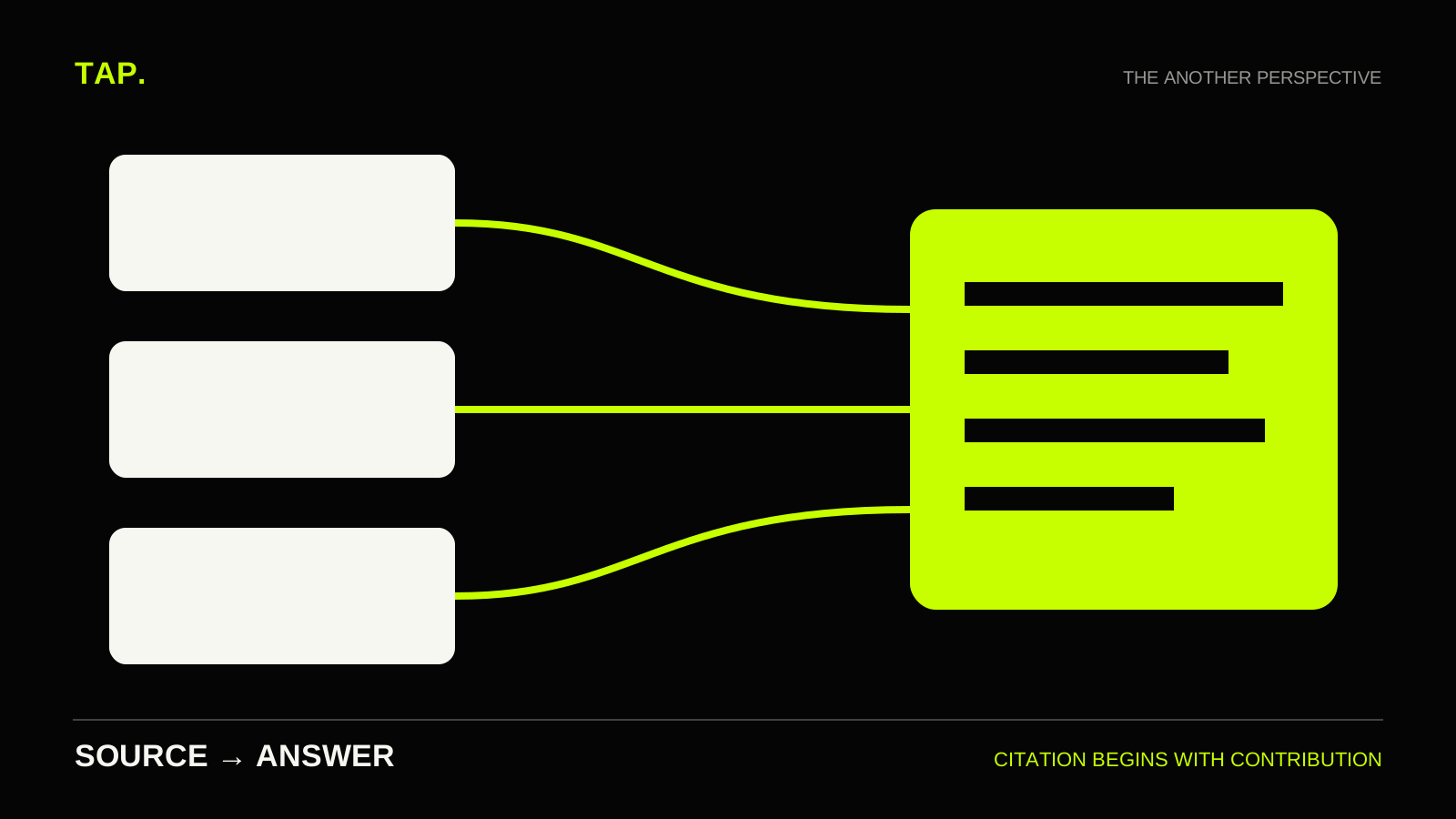
Fig. — A tightening loop.
For years, creators have tried to reverse-engineer social platforms.
Why did one video travel and another disappear?
Did the hook fail?
Was the caption wrong?
Was the audience bored after three seconds?
Was the algorithm simply having a bad day?
Instagram now wants to answer some of those questions itself.
Meta is adding an AI “creative assistant” to its Edits app. The system can draw on a creator’s Instagram performance data, including views, likes, shares and video retention, and offer suggestions about what to make next.
Creators can ask for ideas. They can ask why one post worked better than another. The assistant can suggest hooks, captions, trending audio and video scripts.
On the surface, this is the feature creators have asked platforms to provide for years: tell us what the data actually means.
When the algorithm becomes the coach
But it creates an unusual loop.
Instagram controls the distribution system.
Instagram measures the performance.
Now Instagram can also advise the creator how to design content for that system.
YouTube is moving in a similar direction with AI-powered creator tools.
This could be genuinely useful.
A small creator does not have a data analyst. Most people cannot manually compare retention curves across dozens of posts and reliably identify patterns. An assistant that turns raw metrics into plain-language advice could save hours.
The tension appears when everyone receives optimization advice from the same source.
Imagine thousands of creators being told that a certain opening structure retains viewers longer.
Use this type of hook.
Cut the introduction.
Put the payoff earlier.
Choose this audio.
Make the caption shorter.
Each recommendation may be rational on its own.
Collectively, they can push content toward similarity.
Social platforms already reward formats through algorithms. Trends spread because creators observe what is working and copy the structure.
An AI coach could accelerate that feedback loop.
Instead of creators independently guessing what the algorithm prefers, the platform can explain the preference directly.
That changes the relationship.
The algorithm stops being only the system that decides whether content travels.
It becomes one of the inputs shaping what gets created in the first place.
There is also a business layer. Meta says the creative assistant will be free up to a point, while heavier users may eventually pay through a Meta One subscription.
So the same company can host the audience, rank the content, provide the performance data and sell advanced advice about how to perform better.
None of this means creators should avoid the tool.
Good analytics can make creative work smarter. A creator who understands why viewers leave a video can communicate more clearly.
But optimization has a ceiling.
If everybody is perfectly optimized for the same signals, the content that stands out may be the content willing to ignore some of the advice.
The algorithm can tell a creator what has worked.
It cannot guarantee that repeating it is what people want next.