· 6 min read
Meta Removed the Word 'Train.' The Web-Crawling Permission Remains.
Meta narrowed a controversial clause after publishers objected. The question now is not whether one word disappeared, but how much access businesses consent to when they depend on a platform.
By TAP Desk
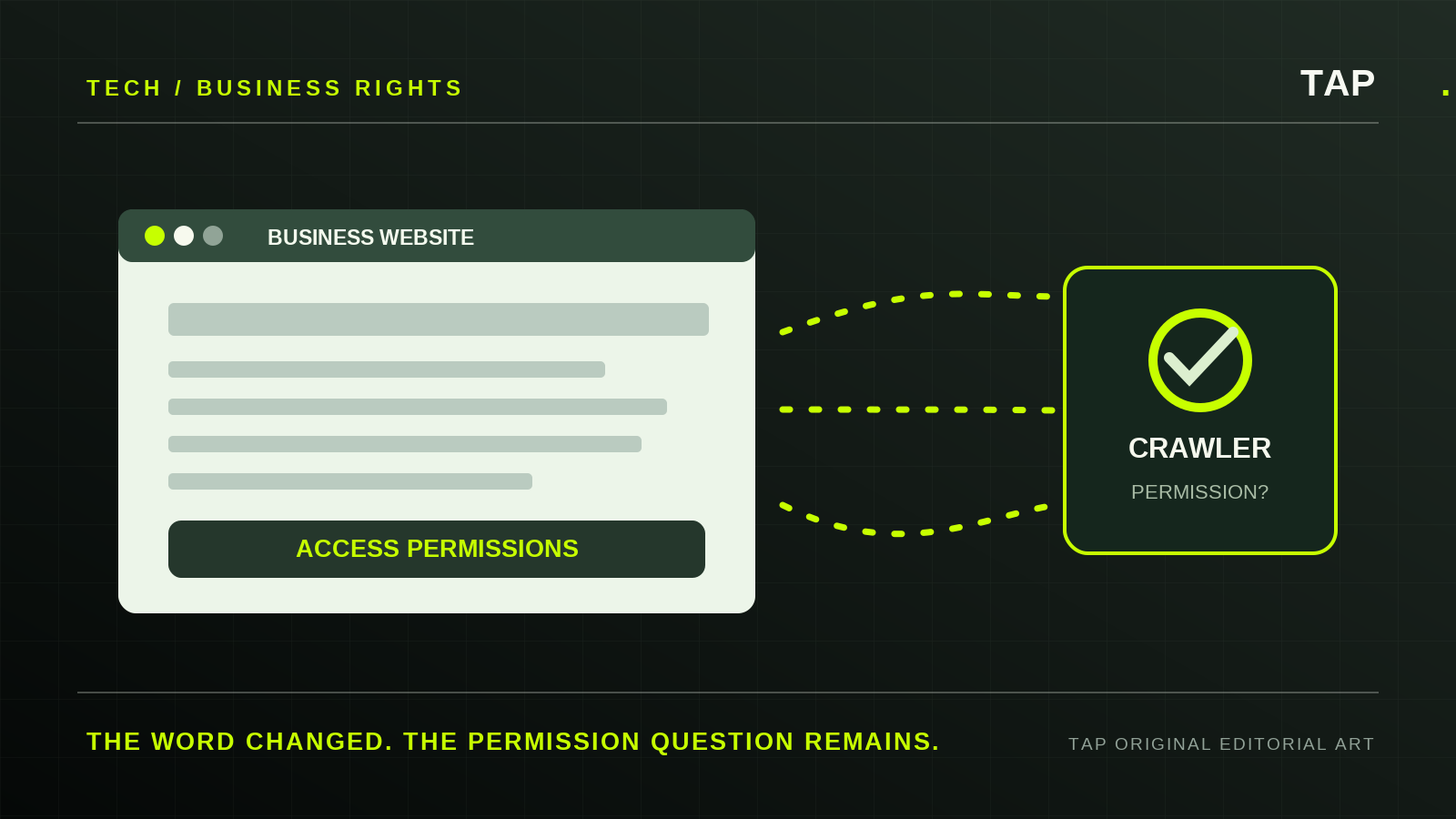
Conceptual illustration, not a screenshot of Meta's interface or a record of actual website crawling. · TAP original editorial artwork
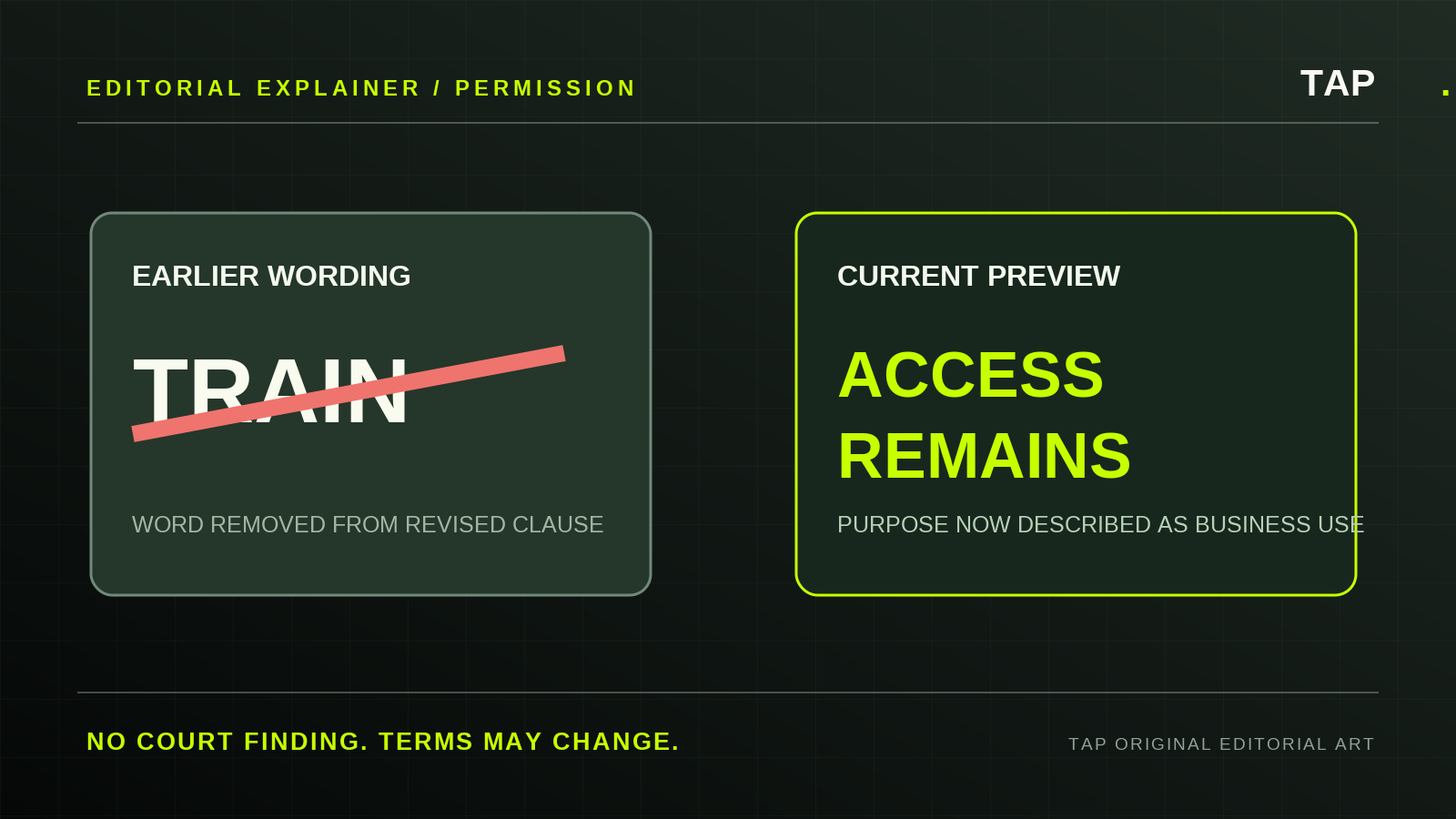
A single word disappeared from Meta's upcoming business contract after news publishers and lawyers sounded the alarm. In an earlier version of a proposed Commercial Terms update, Meta explicitly described using material collected from associated websites to 'train' its products. The current preview no longer says that. Meta says the update was always about advertising and business tools, not a new campaign to harvest news sites.
That is a meaningful correction to the text. But it is not the same as removing the web-crawling permission. The larger story is how a company that depends on Facebook, Instagram or other Meta business tools is asked to consent to automated access beyond the content it posts directly on those platforms.
What actually changed in the contract
Meta's live Commercial Terms preview, checked October 23, states that the updated terms are scheduled to take effect November 20, 2026. Earlier reports described an November 20 deadline; that is no longer the date displayed in the preview. This distinction matters because the effective date and wording could change again. It covers commercial activity such as buying ads, listing products, running a Page or using business management tools. The terms also say a business acting for a client must ensure that client follows the applicable agreements.
The web-crawling clause remains substantial. It authorizes Meta or parties acting on its behalf to use automated tools to access, index, cache, analyze, collect and retrieve material from domains, pages or URLs associated with a business's products or services. It also mentions creating test credentials and periodically pulling updates.
· TAP original editorial artwork
The newer text now links those activities to developing, improving, researching and maintaining advertising and business products, as well as protecting Meta products. It no longer expressly lists model training as a purpose. Those differences matter: reporting that Meta 'still says it can train on any publisher's website' would misstate the revised language.
Why publishers objected, and why Meta disputes their reading
Nieman Journalism Lab's October 15 investigation asked legal experts to examine the earlier version. They worried that a broad website-access authorization, buried inside commercial terms used by many news organizations, could become an argument for using reporting without separate licensing. The legal analysis was a warning about possible interpretation, not proof of actual scraping or a court ruling.
After Meta changed the wording, Nieman Lab returned to several experts. They remained concerned that 'develop' and 'business products' could be interpreted broadly and that the phrase 'associated with your products or services' did not clearly limit the extent of a website that might be accessed. Publisher trade groups also objected. Their concerns deserve attention, but they are not findings of unlawful conduct.
Meta's account is different. Its spokespeople said the change consolidates previously scattered provisions for advertising and business products, does not change crawler behavior, is not aimed at scraping news sites, and does not give the company rights that supersede website owners' robots.txt preferences. Any fair account has to report that position alongside the objections.
The permission problem is bigger than the word 'train'
A website owner can publish a robots.txt file asking automated visitors not to enter certain areas. A contract can separately describe what one party believes it has permission to do. A legal expert cited by Nieman Lab stressed that robots.txt expresses a preference and is not, by itself, a universal legal prohibition. Meta says it respects such preferences. Those are distinct claims that should not be collapsed into a headline about an immediate bypass.
The unusual feature is the relationship between the website and the business account. A local shop might use social ads because customers are there. A publisher might rely on a Page to reach readers. A creator might use a business profile to manage partnerships. These users may not view their websites as part of the same bargain as an ad campaign, even though the agreement describes material associated with their services.
That creates a question of practical choice. Formally, a company can reject new commercial terms by stopping commercial use. In practice, leaving a major distribution channel may carry a real cost. That asymmetry is a structural concern, not evidence that Meta has already abused the clause.
What would prove the revised promise is working?
Rather than guessing what a crawler might do, the useful tests are concrete. Will Meta define how far 'associated with' extends? Will its public crawler documentation match the contract? Will business customers be able to see which agents visited which pages and for what purpose? And will publishers have meaningful ways to challenge access or use that exceeds their expectations?
None of those questions establishes that the upcoming terms are illegal. They identify where clarity is still missing. The text could change again before the effective date, and the final version should be checked rather than assumed.
The TAP perspective is that removing a contested verb is a start, not a complete answer. When a platform controls access to customers, the real issue is whether businesses understand and can meaningfully negotiate the permissions they give in return.