· 5 min read
A $200 Million Bet on Military Dogs Raises a Bigger Question: Who Protects the Animals?
Warhound proposes cloning, genetics and military-grade equipment for working dogs. Its plans are not yet demonstrated outcomes.
By TAP Desk
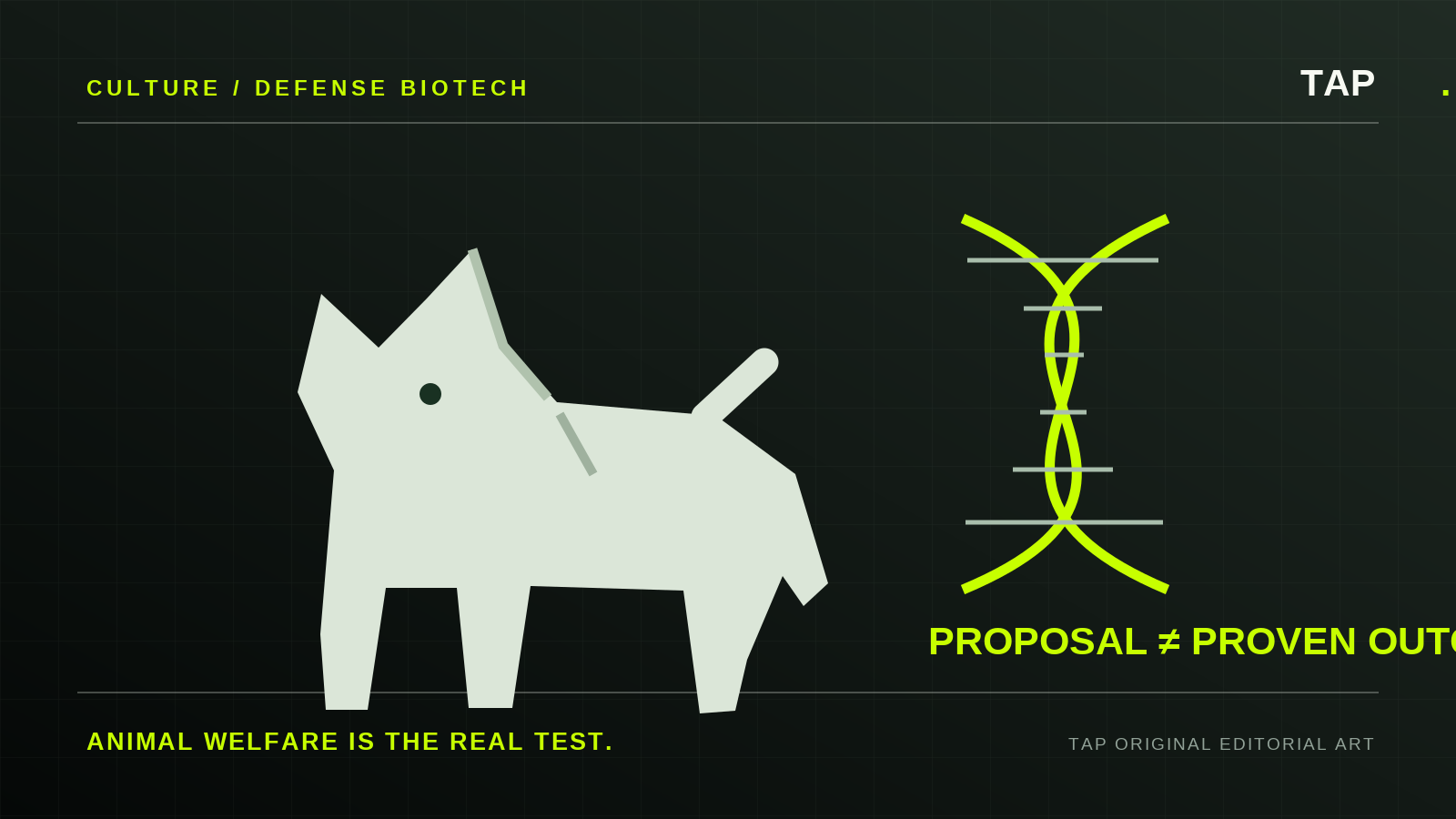
Original TAP concept artwork. It does not depict a Warhound animal or a deployed genetically modified military dog. · TAP original editorial artwork
Warhound has raised a reported $200 million for an unusual proposition: combine genetics, cloning and protective technology to improve the supply of working dogs for military and first-response roles. Announced on October 22, the startup brings together technology associated with Ben Lamm's Colossal Biosciences and equipment from Palmer Luckey's Anduril.
That investment is an actual company announcement, but the promised new generation of enhanced dogs is not yet an independently demonstrated capability. The overlooked question is whether scientific advances will improve dogs' lifelong welfare as well as what military purchasers get from the program.
The announcement is not a deployed military program
Warhound announced a $200 million seed round and named David Spirk as CEO. It says its business will address US reliance on overseas breeders of specialist dogs and combine genetic research with a domestic breeding and training pipeline. The Verge and Silicon Hills News separately reported the startup's launch and proposed partners.
The Verge explicitly says the envisioned genetically enhanced working dogs do not yet exist. Silicon Hills News says the company has not specified the number of dogs it will produce or the date they would enter service, nor documented a military procurement agreement. A well-funded idea is not evidence that an agency has approved or deployed the final animals.
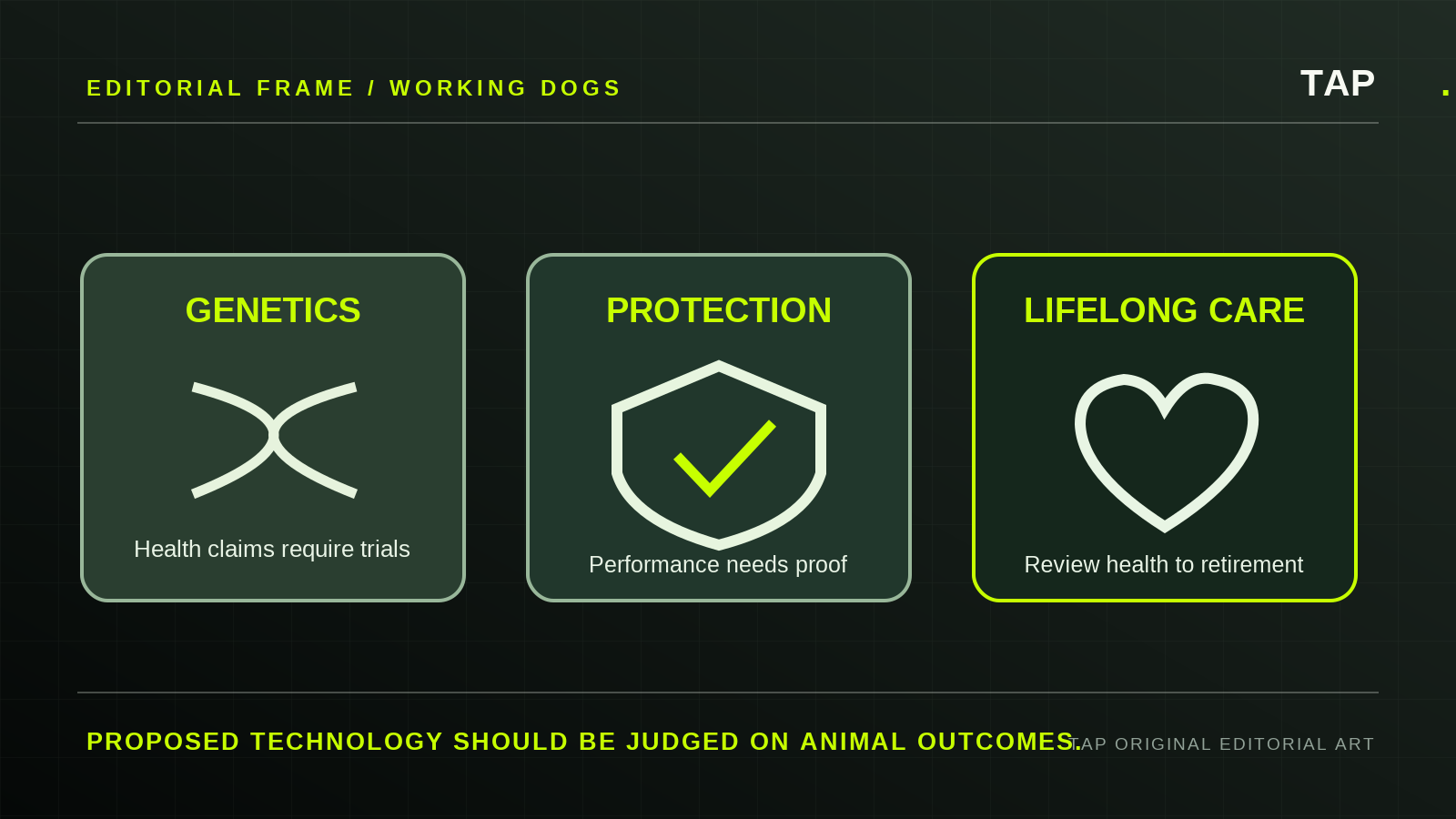
· TAP original editorial artwork
Cloning, genetic changes and wearables are not interchangeable
Cloning an animal, selecting breeding traits and editing genes are distinct biological steps. The company proposes to use genetics and biological research to reduce health and training problems. Those are proposed interventions; the checked sources do not establish a completed welfare or field-performance trial with a new generation of engineered dogs.
Anduril's planned contribution includes protective eye and ear equipment and Eagle Eye situational-awareness technology. Although the company's announcement uses 'cybernetic augments', the disclosed plans do not demonstrate surgically implanted devices. A protective wearable, a software connection and an alteration of inherited traits should never be described as the same technology.
A supply problem can be real without every vendor number being verified
Warhound claims more than four-fifths of US military working dogs are sourced from Europe, and says that fewer than half the animals acquired complete a demanding training pipeline. Those numbers underpin the company's strategy, but in the checked material they are self-reported figures, not an independently reproduced audit of all military dog procurement.
A domestic program might reduce transport complexity and improve continuity of supply. Measuring that benefit would mean comparing actual animal health, costs, suitability for working roles, training completion rates, service years and retirement outcomes across existing and proposed programs. Announcing a seed round cannot replace those comparisons.
Who verifies welfare across the animal's life?
The company says the American Humane Society will advise it on training certification and support retirement and adoption. Those commitments are worth examining, but they do not yet demonstrate an inspected program or independent long-term animal health results. Even a successful training rate would not on its own show that the animals suffer less or enjoy healthier retirements.
Any biotechnology program involving working animals should be transparent about veterinary oversight, care standards and independent measurements. The company's stated goal is to protect dogs and handlers better. The central test is whether those promises can be examined by specialists not responsible for selling the technology.
The TAP perspective: measure the animal, not the pitch
Warhound may eventually help working dogs live healthier lives. It may also encounter difficult technical or ethical limits. A fair assessment should not assume either result. It should separate commitments, prototypes and tested field outcomes, including whether agencies have purchased or used the program's products.
The most meaningful scorecard would follow dogs from birth through training, deployment and retirement. Health, safety, quality of life and independent oversight are much stronger signs of success than a headline about the amount of money a startup has raised.