· 6 min read
Google Is Paying 400 News Publications for AI. The Bigger Question Is Who Gets the Reader.
Google says its News AI pilot now includes more than 400 publications. Payment for licensed content is real, but it does not answer who controls audience relationships in an AI-mediated news ecosystem.

Printed newspapers illustrate the publisher side of Google's News AI licensing agreements; this is not a photo of Google, a contractual meeting or any named partner. · Tim Mossholder / Unsplash
The headline is reassuring for newsrooms anxious about artificial intelligence: Google is paying for journalism. On October 15, the company said more than 400 publications worldwide now participate in its News AI pilot, including CNN, Axios, the Financial Times, Forbes and several local U.S. news organizations. That is a meaningful commercial development. It is also the beginning of a harder question, not the end of one.
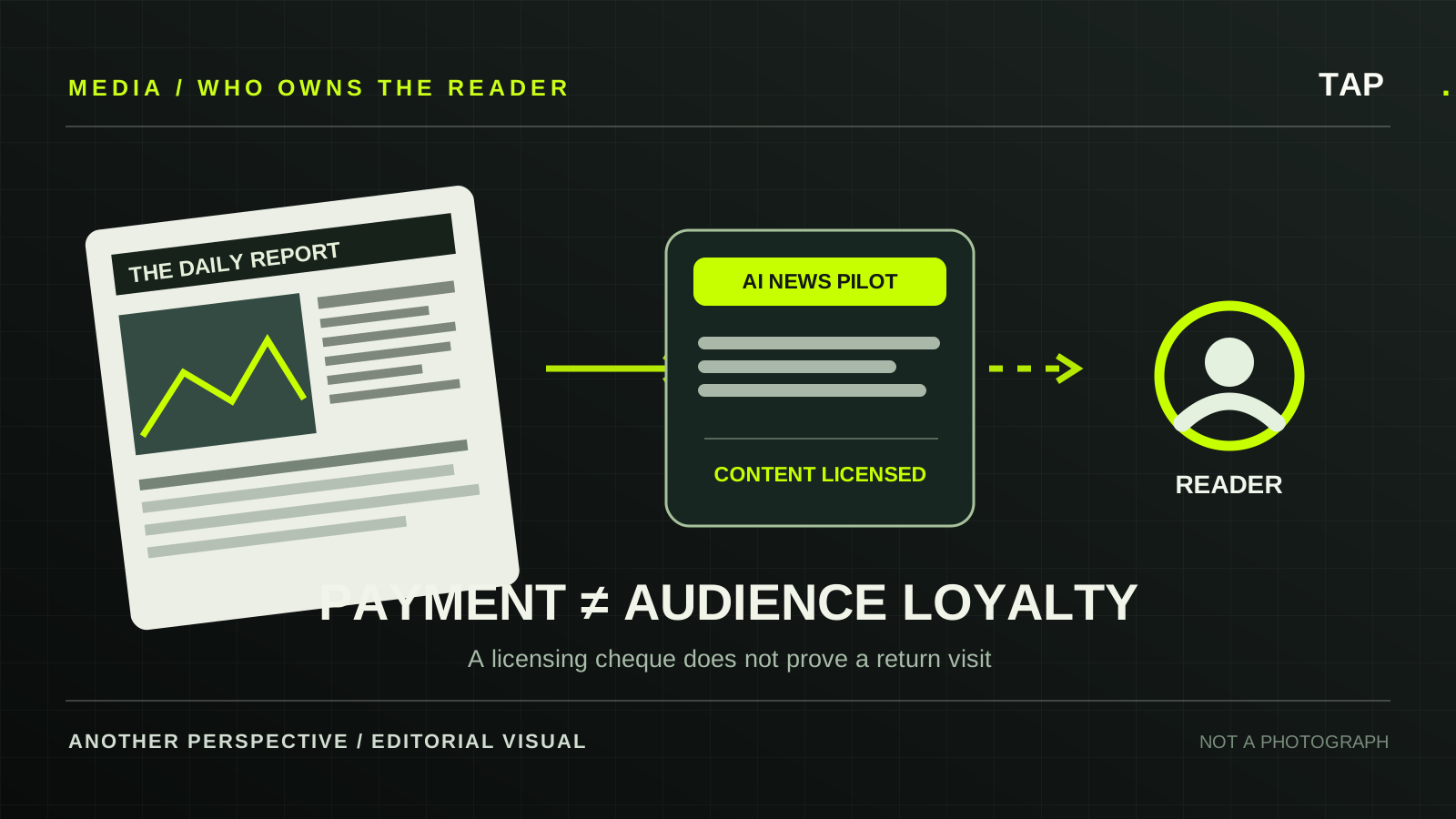
When a reader learns about a story through an AI summary or a generated audio briefing, who owns the next interaction? A publisher can be paid for supplying content while the platform still controls the moment of discovery. Those are different forms of value, and the difference could shape the economics of news.
What the new agreements actually cover
Google says its pilot licenses enhanced publisher content for experimental features in Google News. The company points to longer story previews on publisher pages and customizable audio briefings that help users catch up on news. It says the features contain attribution and links to original articles. CNN separately confirmed a multiyear agreement involving enhanced content rights for experiments in Google products.
Those details matter because 'Google pays news publishers for AI' is too broad a description. This is not a disclosed blanket payment for every article on the open web. Nor should the News AI pilot be conflated with all of Google's AI Overviews, AI Mode or model-training arrangements. Nieman Journalism Lab reports that Google would not reveal the precise financial terms, and that this pilot does not pay publishers according to the value of each generated answer.
· TAP original editorial artwork
The number of participating publications also says little about the size or fairness of individual payments. A large international outlet, a regional newspaper and a nonprofit local newsroom can face very different costs, audiences and negotiating leverage.
A cheque does not equal a click
For much of the web's history, search created a recognizable bargain. Publishers made articles discoverable, search engines displayed results, and readers who clicked arrived on publisher-owned pages. Those visits could support subscriptions, advertising, newsletters and repeat habits. Generative interfaces complicate that sequence by presenting a useful answer before the visit happens.
A licensed AI briefing might send someone to a story they otherwise would never have found. It might also satisfy the person's curiosity without a visit. Both outcomes are plausible. Google says its features are designed to connect readers to publishers, but the October 15 announcement does not publish a controlled measurement of incremental referrals, subscriptions or revenue retained by publishers.
The Reuters Institute has documented concern about AI summaries reducing publisher traffic, while also noting that some readers prefer concise answers. The issue is not that every AI summary is harmful. It is that licensing income, referral traffic and direct audience loyalty should be measured separately. Counting a publisher as a 'partner' is not evidence that all three improved.
Why smaller publishers face a different bargain
Large news brands can offer exclusive reporting, established subscriber relationships and legal resources. Smaller publishers may have valuable local reporting but less negotiating power. Google has included local newsrooms in this expansion, an important sign that the pilot is not limited to global brands. Whether the terms work equally well for those outlets is not publicly established.
The Reuters Institute describes how publishers are exploring collective standards and shared licensing frameworks, partly because individual negotiations with enormous technology platforms are structurally unequal. That does not prove collective bargaining is the right solution for every outlet. It does show that the question of who sets the rules is becoming as important as the question of who receives a payment.
For a small publication, a contract that brings cash today could still create dependence tomorrow if the audience learns to consume its work entirely inside someone else's interface. Conversely, a product that delivers genuinely new readers and recurring subscriptions could be a strong partnership. The difference needs evidence, not a press release.
What a meaningful win would look like
A useful public scorecard would ask four questions. How many users click from the AI experience to the original article? How many are genuinely new readers rather than existing visitors redirected through a different surface? How much revenue reaches publishers after licensing and distribution costs? And can publishers audit how their material is summarized, attributed and corrected?
Google's announcement does not answer all of these questions, and private contracts may limit what partners can disclose. That is not evidence of misconduct. It is a reason to be precise about what has been demonstrated. The deals establish participation and payment, not the ultimate health of the journalism ecosystem.
For TAP, the overlooked story is the difference between being compensated as a supplier and being remembered as a destination. AI can make news easier to access. A sustainable news economy also needs a way for the people who report the stories to build relationships with the people who read them.