· 5 min read
Anthropic's Junior Hiring Share Fell Sharply. The Missing Story Is How People Learn.
Anthropic reports fewer junior technical hires as agent use expands. Its internal data is revealing, but not proof that AI caused a wider employment decline.

Illustrative software-development workplace, not employees or the offices of Anthropic. · Compagnons (@sigmund) / Unsplash
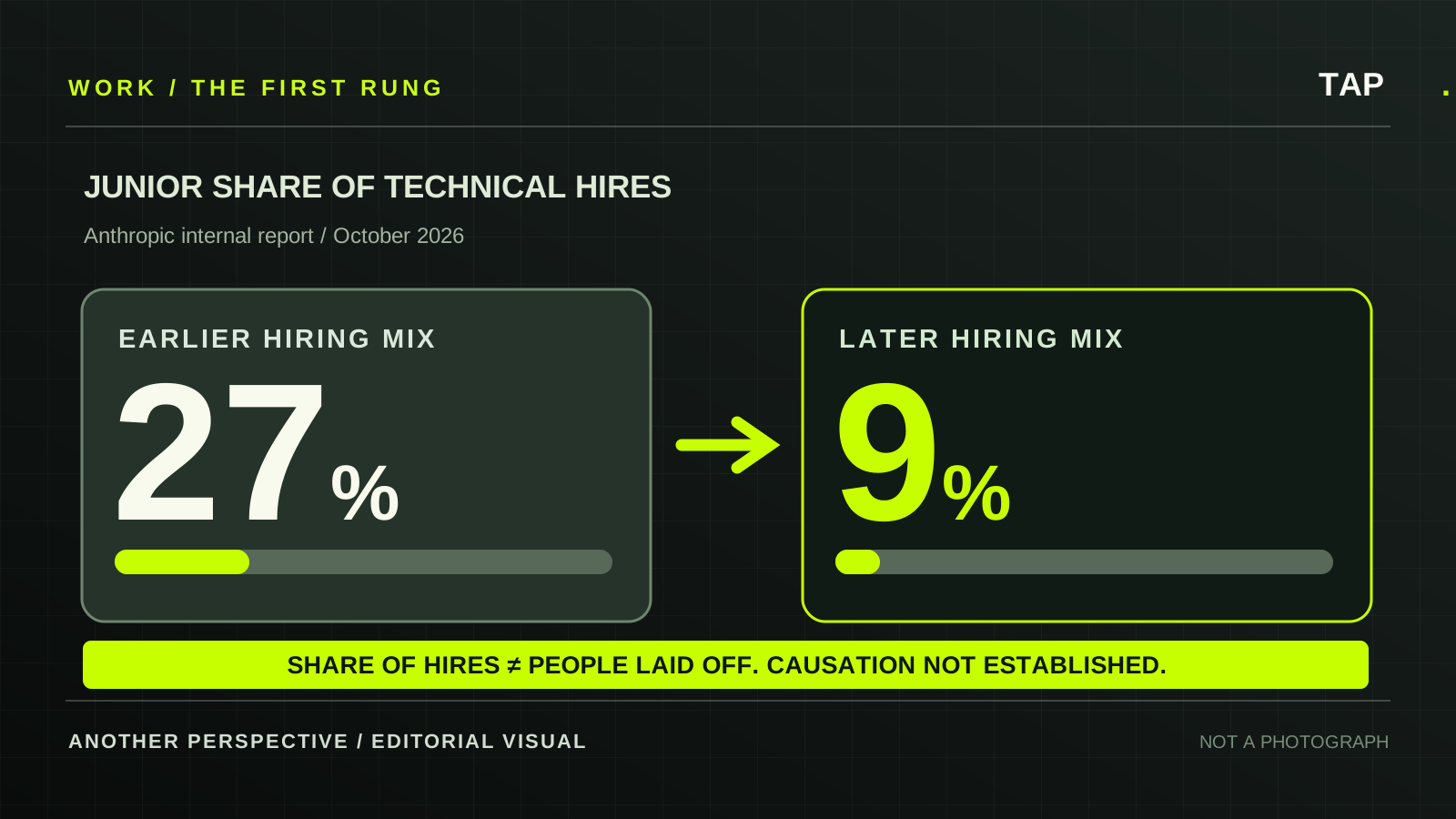
Anthropic published a study of its own workplace on October 16 with a striking statistic: junior positions fell from 27% to 9% of technical hires over the period it studied. The company was expanding, not reporting a shutdown of technical recruitment. Still, the mix of who gets hired has changed sharply.
That distinction is important. A lower share of junior hires does not prove that all graduates are losing opportunities because of AI. But if a frontier AI company increasingly needs employees to supervise automated work rather than carry out every component manually, the entry-level training question becomes difficult to ignore.
The measure is hiring composition, not a layoff count
Anthropic's researchers analysed internal recruiting records, AI use, employee activities and interviews. They report that junior employees declined from 21% to 14% of technical staff and that the junior share of technical hiring dropped faster, from 27% to 9%. Those are percentages within a changing company; they are not a tally of people dismissed.
Independent coverage by Think Facility also highlights the company's continued absolute technical hiring alongside faster growth in other departments. It is therefore misleading to present the study as evidence that Anthropic simply replaced a fixed group of engineers with software. The organisation, its scale and its job mix have evolved together.
· TAP original editorial artwork
Six agent-hours for each employee hour
Anthropic says that by August, interactive AI agent hours ran at roughly six times employee hours. That comparison describes accumulated operating time, not six workers' worth of verified productivity. Agents can wait, retry, produce drafts or require human supervision, so raw hours do not translate neatly into equivalent full-time jobs.
The report also describes managers placing more emphasis on autonomy and judgement, while employees increasingly monitor, direct and check automated systems. This may improve output. It also changes the skills required for someone to become useful on their first day at work. Supervision is easier when a person already understands the task being delegated.
A smaller first rung could change the whole career ladder
Many professionals learn through repetitive early assignments: testing a feature, reconciling a report, documenting a decision or preparing a first draft. If automated tools absorb more of that practice, junior employees may need different structured learning opportunities. This is a plausible workforce implication of the observed pattern, not an outcome established by Anthropic's study.
Companies could respond by creating supervised apprenticeships where beginners critique agent output, handle edge cases and learn to diagnose mistakes. Without such systems, an employer may gradually demand senior-level judgement from candidates whom nobody has trained. A more productive organisation could inadvertently narrow its own future talent pipeline.
What the findings do and do not show
Anthropic is unusually intensive in its use of the AI tools it produces. Its own report warns against treating one employer as a direct proxy for the labour market. Broader claims about national graduate unemployment require external data, industry comparisons and a way to separate the effects of AI from changing budgets and business conditions.
The TAP perspective is not that junior jobs have disappeared. It is that the division between doing work and directing tools is shifting inside at least one influential company. If that shift spreads, an important test will be whether employers preserve accessible routes for people to gain the judgement that AI supervisors are now expected to possess.