· 7 min read
The Emmys are leaving broadcast TV. That says more about television than the awards themselves.
The Emmy Awards will move exclusively to Prime Video from 2027 under a six-year deal, ending the long-running rotation among ABC, CBS, Fox and NBC. The ceremony is following the audience it was created to celebrate.
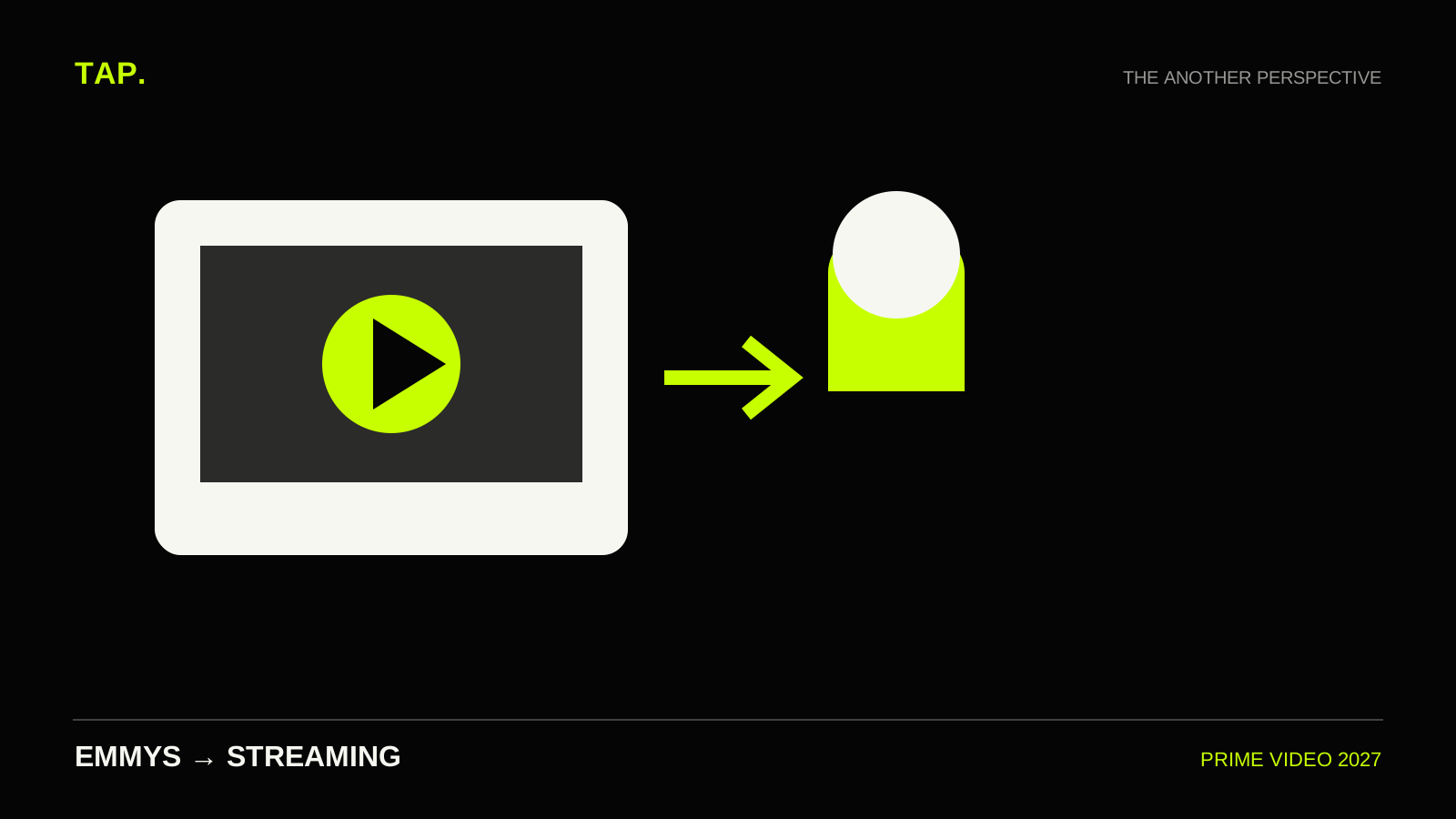
Fig. — Television's ceremony follows television's audience.
For decades, the Emmys rotated among the major American broadcast networks that television viewers already knew: ABC, CBS, Fox and NBC.
Beginning in 2027, that arrangement ends.
The Television Academy and Amazon announced a six-year deal making Prime Video the exclusive global home of the Emmy Awards.
This is not simply another rights deal
The symbolism is unusually neat.
The Emmys exist to celebrate television. But television itself has fragmented into broadcast, cable, subscription streaming, ad-supported streaming, social video and creator platforms.
Moving the ceremony to Prime Video acknowledges that the medium no longer has one natural distribution system.
The Emmys will still be free
The Television Academy says the ceremony will remain live in September and will be available free to viewers worldwide without requiring a Prime subscription.
That detail matters. Amazon gets the event inside its ecosystem, but the Academy avoids turning a mass cultural ceremony into a premium-only product.
The Academy says Prime Video can make the event available across more than 240 countries and territories.
The old 'Wheel Deal' reflected an older TV economy
Rotating the Emmys among broadcast networks made sense when those networks were the center of American television distribution.
Each network had a huge national audience, and each benefited from the promotional value of hosting a ceremony that celebrated the industry.
Streaming weakened that center. Many of the most nominated and discussed shows now come from platforms that are not traditional broadcasters at all.
Live events are becoming strategic
Streaming platforms originally differentiated themselves with on-demand libraries: watch whatever you want, whenever you want.
Now they increasingly want live sports, news, concerts, awards and other events because live programming creates a shared moment and gives users a reason to open the service at a specific time.
Prime Video has already expanded heavily into live sports and event programming. The Emmys fit that strategy.
Awards shows are also marketing machines
An awards ceremony does not only reward shows. It reminds viewers what exists.
When a platform hosts the ceremony, the distance between seeing a nominated program and watching it can shrink dramatically.
A viewer can encounter a winning show, search for it and start streaming without leaving the same ecosystem.
The larger shift
The Emmys are not abandoning television. They are redefining where television happens.
The same transition is happening across entertainment. The Oscars have announced a future move toward YouTube, while sports leagues continue to split rights across traditional and digital platforms.
The interesting part is that streaming once positioned itself as the alternative to television. Now the biggest streaming services are rebuilding many of television's old functions: channels, live events, advertising, bundles and appointment viewing.
The screen changed. The need to gather an audience did not.