· 7 min read
AEO and GEO sound like new disciplines. Google says the foundation is still SEO.
Answer Engine Optimization and Generative Engine Optimization are popular labels for AI-search visibility. Google’s own guidance says there is no separate set of technical hacks: useful, crawlable, original content and normal SEO remain the foundation.
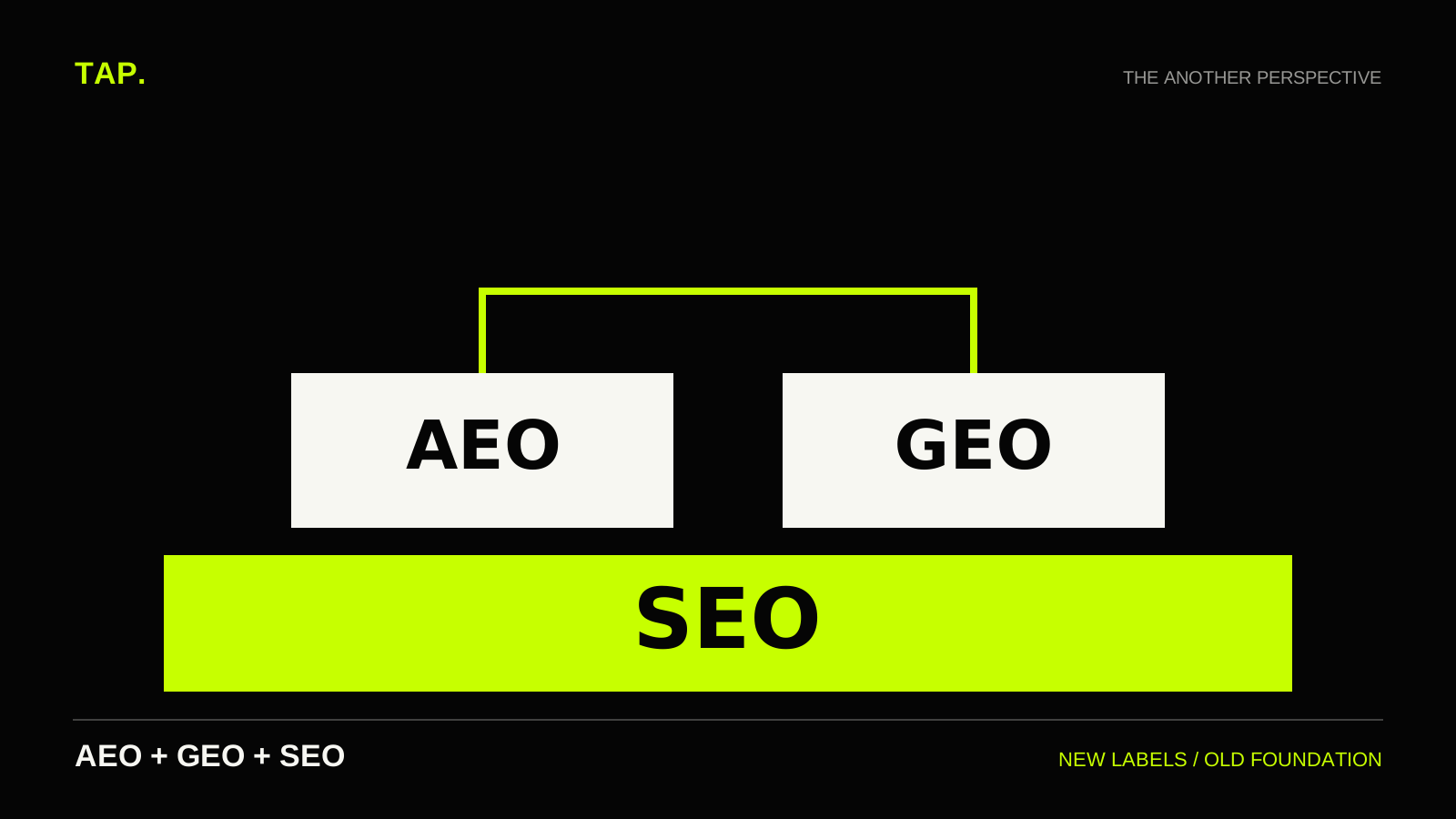
Fig. — New labels, familiar foundations.
The search industry loves a new acronym.
As AI-generated answers spread across Google, ChatGPT, Perplexity and other systems, two labels have become common: AEO, or Answer Engine Optimization, and GEO, or Generative Engine Optimization.
The useful idea behind both is real. Visibility is no longer limited to ten blue links.
The mistake is assuming that a new interface automatically requires a completely separate optimization playbook.
What AEO usually means
AEO is generally used for work intended to make content more likely to appear in direct-answer experiences. That can include featured snippets, voice assistants and AI-generated answers.
The emphasis is often on making facts explicit, structuring explanations clearly and answering real questions without unnecessary friction.
What GEO usually means
GEO is usually used more specifically for visibility inside generative AI systems. The goal is often described as being cited, referenced or selected by AI-generated responses.
Different consultants use the term differently, which is part of the problem. There is no universal GEO standard or official ranking system that publishers can optimize against.
Google's position is simpler
Google's 2026 guidance says that, from its perspective, optimizing for generative AI Search is still optimizing for Search.
Its AI features rely on the core Search index, ranking systems and quality systems. A page generally needs to be indexed and eligible to appear in Search with a snippet before it can appear as a supporting link in AI Overviews or AI Mode.
Google also says there is no special schema markup required for generative AI search.
What Google says not to chase
The official guidance directly addresses several popular tactics.
Google says an llms.txt file does not help a site rank or appear in Google's generative AI Search features. It says there is no requirement to break pages into artificial 'chunks' for AI. It also warns against rewriting content only for AI systems or chasing inauthentic mentions across the web.
That does not mean every idea associated with AEO or GEO is useless. It means the useful ideas tend to overlap with good publishing and good SEO.
What actually improves the odds
Create something non-commodity. Google specifically recommends unique perspectives, first-hand experience, original reporting and material that adds value beyond what a generic AI system could produce.
Keep important content available in text. Use descriptive titles and headings. Make the site easy to crawl. Use internal links so related pages are discoverable. Add relevant images and video when they improve the page.
Use structured data when it matches visible content and helps with an established Search feature, not because someone promised a secret AI-ranking boost.
So should you ignore AEO and GEO?
No. They can be useful names for a real strategic question: how does a publisher remain visible when search engines increasingly answer before the click?
But treat them as extensions of search strategy, not replacements for it.
The practical stack is still straightforward: technical SEO gets the page discovered, editorial quality gives the system something worth selecting, clear sourcing builds trust, and distinctive information gives the reader a reason to remember the site.
The acronym is optional. The work is not.