· 7 min read
One AI search can secretly become ten searches. That is query fan-out.
AI search systems can break one complicated question into several related searches, retrieve evidence for each and then synthesize the result. Google calls this query fan-out, and it changes how content can be discovered.
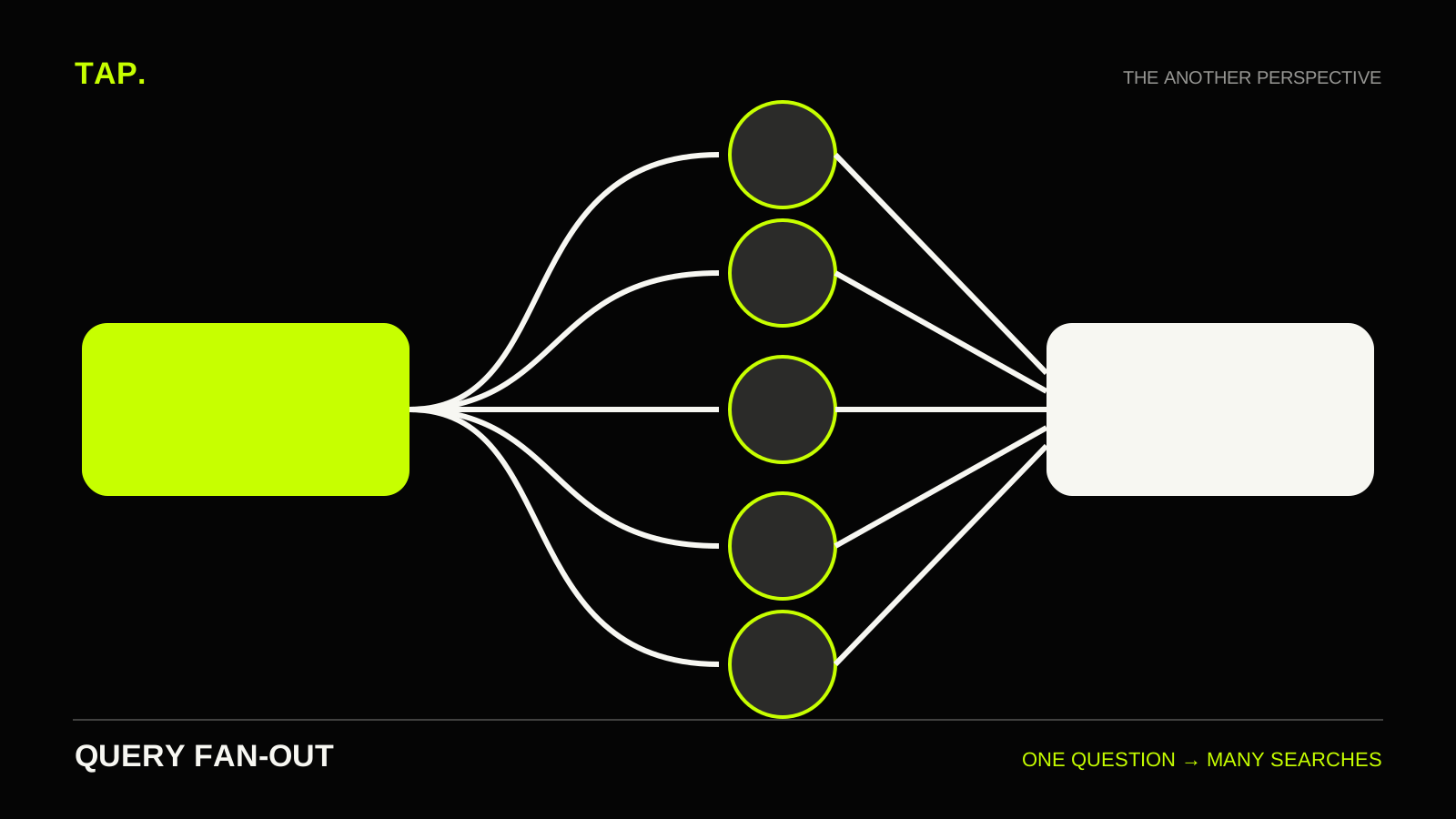
Fig. — One question becomes many retrieval paths.
Traditional search trains us to think in one line: query in, results out.
AI search can be much less linear.
A complex request may contain several hidden questions. A system can split the request into those smaller pieces, search for them separately and then combine what it finds.
Google calls that technique query fan-out.
A simple example
Imagine asking: 'What is the best laptop under $1,200 for video editing, with good battery life, that I can carry to university?'
That is not one information need. It contains price, performance, battery, weight, software requirements and probably availability.
A fan-out system can generate related searches for each part: laptop GPU performance for editing, battery benchmarks, weight comparisons, current prices and compatibility with editing software.
The answer can then be assembled from the evidence collected across those searches.
Why this is different from matching keywords
A page does not need to contain the exact original sentence to be relevant.
One review may be the best source for battery testing. A manufacturer page may be the best source for weight and ports. Another article may explain editing performance. The AI system can use different pages for different subproblems.
That is why trying to create a separate page for every imaginable long-tail phrase is a weak strategy. Google explicitly warns site owners not to mass-produce pages for every possible variation simply to manipulate AI search visibility.
Fan-out makes specificity more valuable
Broad summaries are easy to find. Specific evidence is harder.
If your page contains an original benchmark, a first-hand test, a clearly explained statistic, a useful comparison or a detail that other pages omit, it can become relevant to one of the subqueries even when it is not the obvious top-level answer.
This is one reason original reporting and first-hand experience matter more in an AI-search environment, not less.
Fan-out does not mean the system believes everything it retrieves
Retrieval is only part of the process. The system still has to evaluate relevance, freshness and quality before using information in the final response.
A large number of mentions is not the same thing as strong evidence. Google says its generative AI search features remain grounded in core Search ranking and quality systems.
What this changes for publishers
Classic SEO often focuses attention on a target query and a ranking position. Fan-out adds another possibility: your page may be selected for a supporting sub-question.
That makes clear headings, explicit facts, descriptive image alt text and well-scoped sections useful because they make the contribution of a page easier to understand.
It also makes internal linking more important. A strong cluster of related pages can cover a subject at several levels: a broad explainer, deeper technical pieces, current developments and original analysis.
What it does not change
You still need a page worth retrieving.
Google says the same foundational SEO practices continue to matter: crawlability, indexability, helpful content, page experience and accurate structured data where relevant.
Query fan-out is not a loophole around quality. It is a mechanism that lets a system search more widely for quality.