· 8 min read
Google just signed for 3.6 gigawatts of power. AI is turning tech companies into energy companies.
Google’s new Constellation Energy agreement covers 3,590 MW of power, including 890 MW of added nuclear capacity. The deal shows how AI competition is moving from chips and models into electricity, grids and long-term energy contracts.
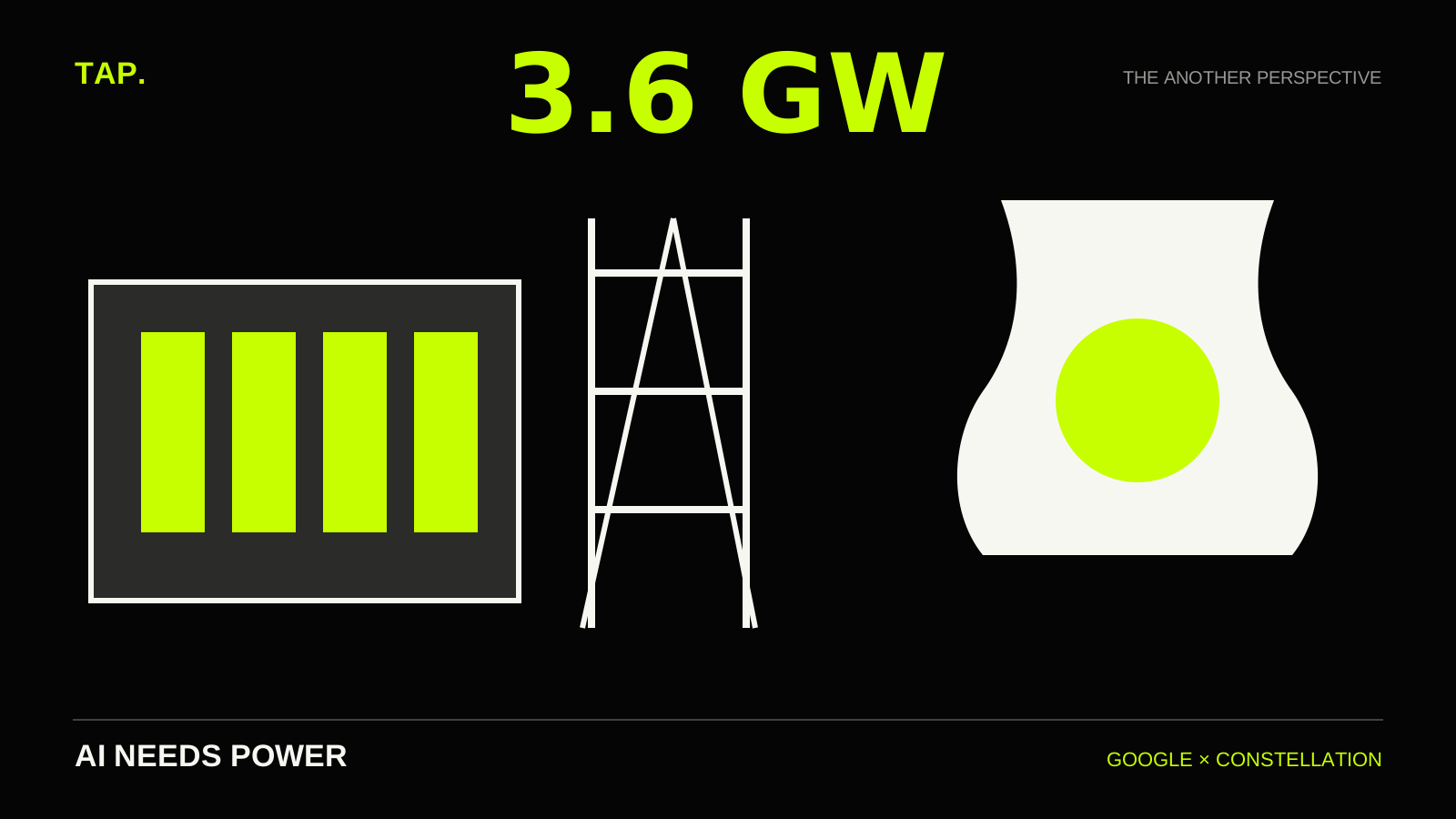
Fig. — AI demand is reaching the grid.
AI is usually described as a software race: better models, faster chips, more useful agents.
Google's latest energy agreement is a reminder that the race is also physical.
3,590 MW
Power covered by Google’s new agreement with Constellation Energy
Reuters reported that Google contracted for 3,590 megawatts of power from Constellation Energy in the PJM grid. The arrangement includes a 20-year agreement tied to 890 MW of additional nuclear capacity and a separate 15-year supply agreement for another 2,700 MW.
For scale, 890 MW is roughly the output of a large power station. Google says the nuclear portion will come from upgrades at existing plants rather than a single new reactor built from scratch.
Why AI companies suddenly care about power contracts
Modern AI data centers consume electricity continuously. Training large models is energy-intensive, but the larger long-term load can come from serving models to millions of users, storing data, networking machines and cooling the hardware around the clock.
A data center cannot simply assume that enough grid capacity will appear wherever it wants to build.
That makes long-term energy contracts a competitive tool. If a technology company can secure reliable power years ahead of demand, it reduces one of the biggest uncertainties in expanding AI infrastructure.
Why nuclear is attractive
Nuclear plants can provide large amounts of electricity with high capacity factors and low direct carbon emissions. For a company that wants dependable power without relying entirely on fossil generation, that combination is attractive.
The Google-Constellation agreement is also notable because it focuses heavily on uprating existing reactors. Instead of waiting for an entirely new nuclear fleet, the companies plan to invest in equipment and efficiency improvements that let existing plants produce more electricity.
Google says the arrangement brings the total new nuclear capacity it has helped enable through uprates and restarts in the United States to more than 1.5 GW.
This is also a grid story
PJM, the largest U.S. power market, has been under pressure from rapidly growing electricity demand. Data centers are a major part of that growth.
Reuters reported that PJM capacity prices have increased sharply since 2024 and that the grid has considered 'bring your own power' approaches for very large new loads.
That changes the relationship between technology companies and utilities. A data center developer is no longer only a customer asking for a connection. It may need to finance or contract for new generation alongside the computing project.
The physical layer of AI is becoming strategic
The AI stack now stretches from software all the way down to land, substations, transmission lines, cooling systems, fuel supply and power plants.
A breakthrough model can be copied or challenged. A multi-gigawatt energy position is much harder to assemble quickly.
That is why the next phase of AI competition may be decided partly by companies that most users never think of as AI companies: utilities, reactor operators, grid managers, transformer manufacturers and construction firms.
The model may live in the cloud. The electricity does not.