· 4 min read
A Music Publisher Sued Both Suno and Anthropic. The Two Cases Show AI's Copyright Problem
Reservoir filed separate lawsuits over alleged use of musical works and song lyrics in AI training. The claims remain allegations, but the two defendants expose distinct business questions.
By TAP Desk
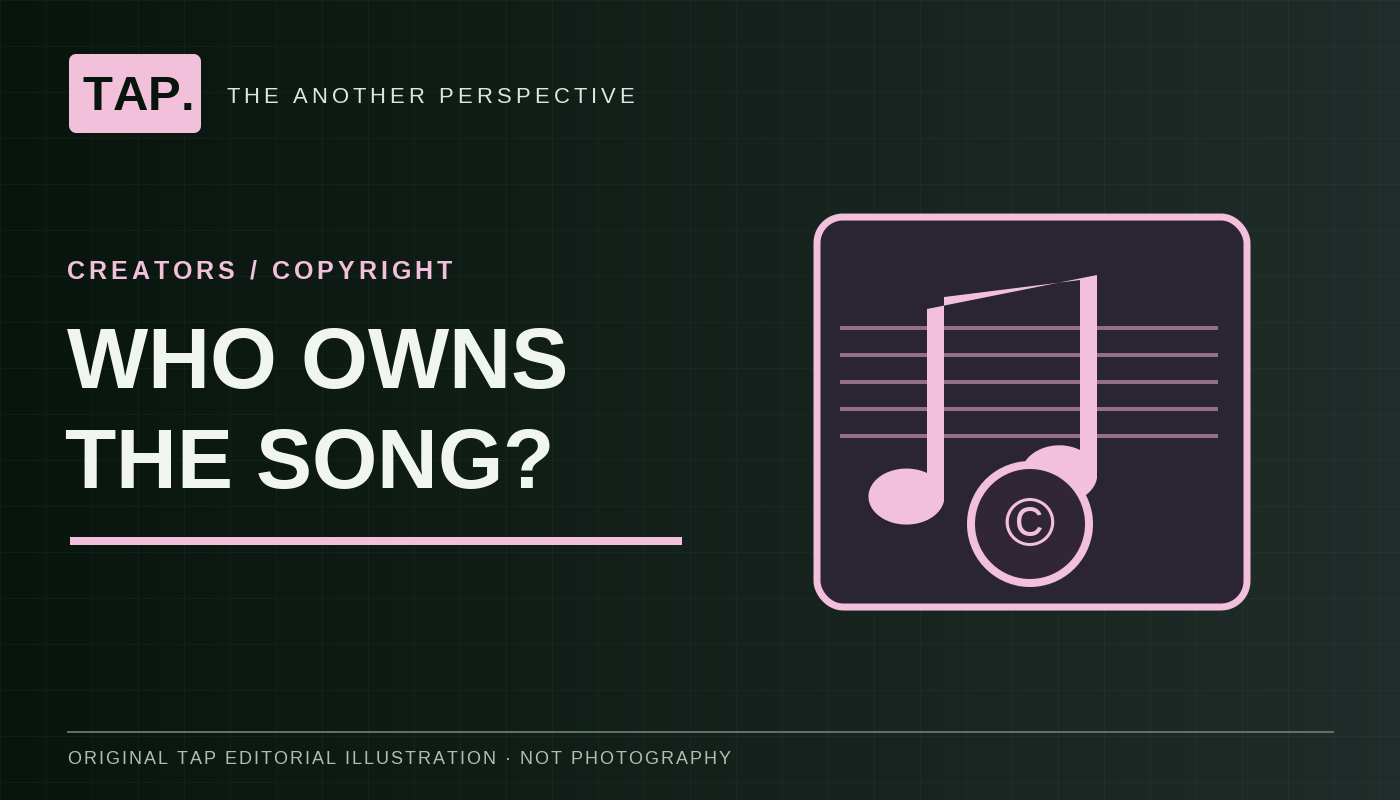
Original music-rights illustration, not a reproduction of any copyrighted composition or album art. · TAP original editorial artwork
An AI music service generates songs in seconds. A chatbot can discuss and sometimes reproduce words from songs. Neither activity is identical, but music publishers increasingly argue that both businesses rely on protected creative work that should be licensed. On October 21, 2026, companies affiliated with Reservoir filed separate copyright lawsuits against Suno and Anthropic.
Reservoir's allegations concern roughly 1,050 musical compositions in the Suno case and lyrics associated with about 853 compositions in the Anthropic case. These figures describe the plaintiffs' claims, not a court's finding that infringement occurred. The distinction matters because an early lawsuit may be compelling news without deciding a complicated legal question.
Two complaints, two different systems
Suno is built for generating music from text and other prompts. That raises copyright questions about recorded music, compositions, training datasets and similarities between outputs and protected works. Reservoir alleges unlawful use of a catalog that includes recognizable songs and asks a federal court for remedies. The defendant has not been found liable in the newly filed case.
Anthropic offers a general-purpose AI assistant rather than a dedicated song generator. The separate Reservoir case focuses on lyrics: text that can be reproduced, summarized or recalled as part of a much broader language task. Treating both cases as 'AI stole songs' collapses different forms of content and potentially different legal defenses into one oversimplified claim.
Why the training process is part of the dispute
AI developers learn patterns from large collections of examples. Music publishers argue that making copies for this process can require permission when copyright-protected works are involved. Developers in the broader AI industry have advanced legal defenses including fair use, and some have entered licensing arrangements while other cases proceed.
The legality of any particular training use depends on facts that are rarely visible in a headline: what material was copied, how it was obtained, the purpose of the copying, and what the resulting product can produce. Allegations about scraping, recording copies or reproducing lyrics need to be attributed to the complaint until evidence is tested in court.
The question is bigger than an individual damages claim
Reservoir's litigation seeks financial and other remedies for alleged infringement. The availability and size of such remedies are legal questions, not agreed facts. Some proposed relief in this area may extend to copies stored in training data or model systems, raising difficult technical and legal questions about what it means to remove protected material.
For creators, the commercial concern is not only whether one company pays a penalty. It is whether songwriters and publishers can negotiate predictable terms when their catalogs help power services that may compete for audience attention. For AI developers, clearer licensing arrangements might reduce legal risk but also increase costs and favor larger companies able to afford broad deals.
Why a licensing market is not a simple fix
A song can involve several rightsholders, including composers, lyricists, publishers, performers and recording owners. That complexity complicates a hypothetical universal licensing fee. A training license for the composition may not resolve claims about recordings or specific reproductions, and a payout to a label is not automatically the same thing as compensation reaching a songwriter.
Any workable framework will have to distinguish the use of works during training from copying identifiable parts in outputs. It also needs credible accounting, transparent scope and a dispute process. Otherwise a deal called 'licensing' could create new inequalities while leaving small artists with little bargaining power.
The TAP perspective: compensation needs more precision than outrage
Generative AI has turned old copyright questions into business-model questions. The tools can help people make original work, but they also change how creative labor is valued and how quickly familiar styles or lyrics can be imitated. Courts are being asked to establish where lawful learning ends and unauthorized exploitation begins.
The Reservoir cases deserve coverage because they expose two sides of that debate at once. The best outcome for creators is not merely a dramatic damages headline. It is a system in which rightsholders know what was used, legal rights can be enforced and innovative tools can operate without pretending the underlying work came from nowhere.