· 8 min read
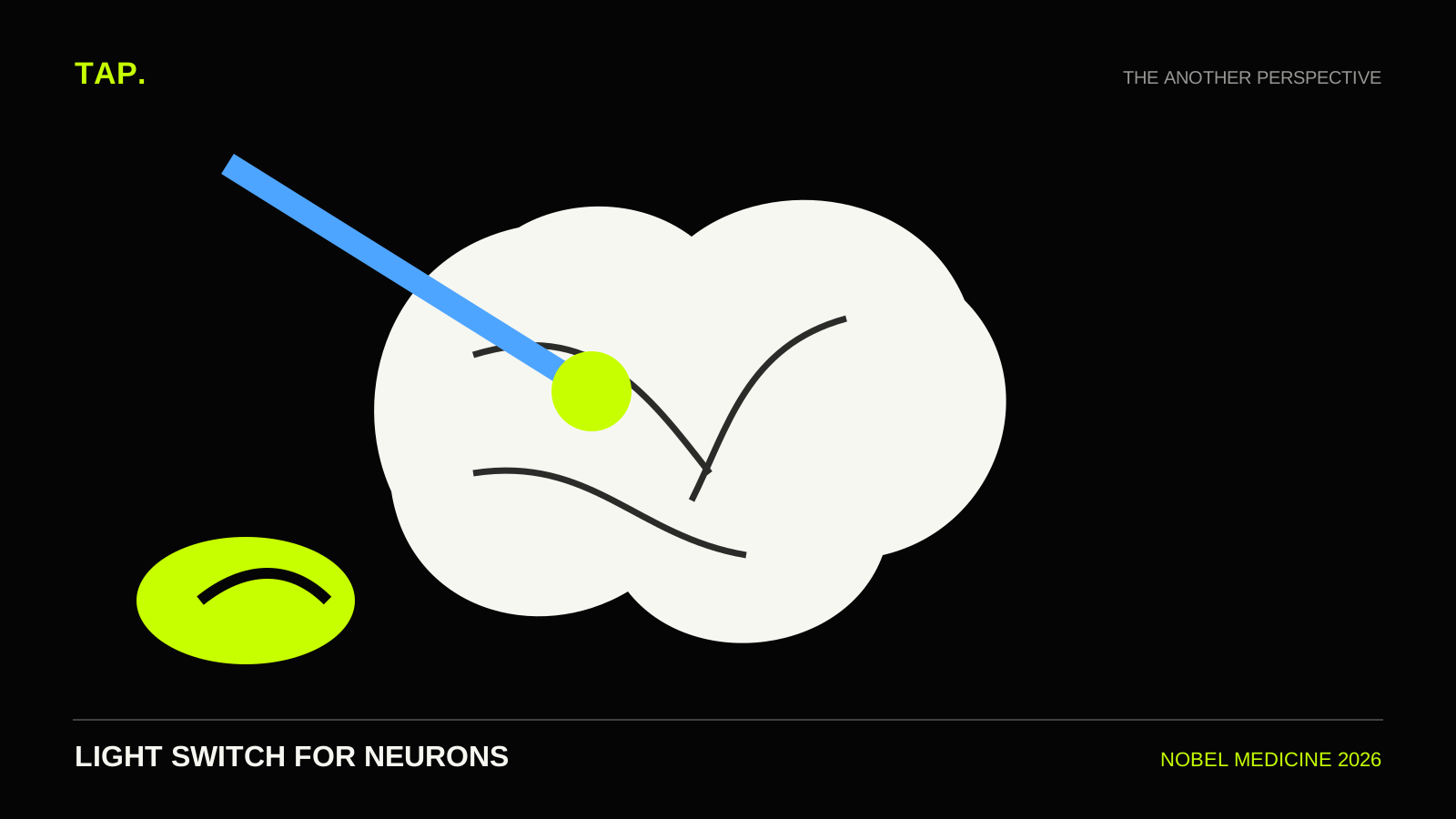
What is optogenetics? Think of it as a remote control for selected neurons.
Optogenetics combines genes and light to control selected cells, especially neurons, with unusual precision. It lets researchers test what specific brain circuits actually do rather than only watching them become active.
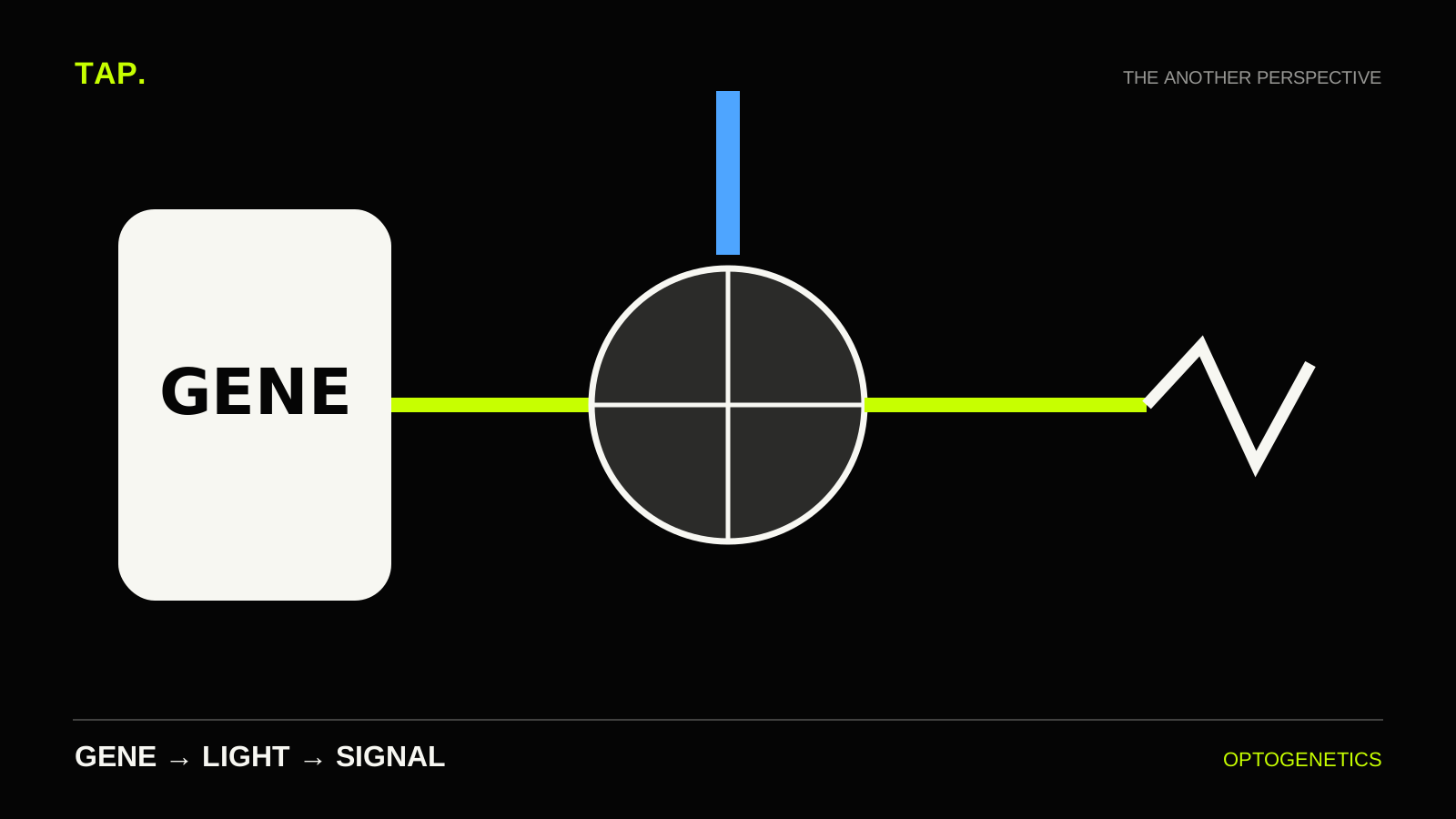
Fig. — Gene → light-sensitive protein → light → neural signal.
Brain scans can show researchers where activity is happening. Optogenetics asks a harder question: what happens if we deliberately turn a particular set of neurons on or off?
The technique combines genetic targeting with light-sensitive proteins, allowing scientists to control selected cells on very short timescales.
Step one: choose the cells
Researchers first need a way to make only the cells they care about respond to light.
They use genetic methods to introduce instructions for a light-sensitive protein into a selected cell population. One of the most famous proteins is channelrhodopsin, originally discovered in algae.
Step two: the cell builds a light-sensitive channel
The introduced gene instructs the cell to produce the protein in its membrane.
When the right wavelength of light reaches that protein, the channel opens. Charged ions move across the membrane and alter the electrical state of the cell.
In a neuron, that can trigger an electrical impulse.
Step three: deliver light
In laboratory animals, researchers can deliver light through very small optical fibers or other devices placed near the target cells.
Different engineered proteins can be used to activate or suppress activity, giving researchers control over the timing of a circuit.
Why timing matters
Neural signals operate quickly. A drug that affects a brain region for minutes or hours may be too blunt to identify what happens in the fraction of a second when a circuit changes behavior.
Light can be switched on and off rapidly, which gives optogenetics unusually precise temporal control.
Why cell type matters
Two neurons sitting close together can have different genetic identities and different connections.
Traditional electrical stimulation can activate several kinds of nearby cells at once. Optogenetics can target a defined population, which makes experiments easier to interpret.
What optogenetics can tell us
Researchers have used the method to investigate circuits involved in movement, memory, reward, fear, feeding and social behavior.
The important distinction is causation. If activating a particular neural population reliably changes a behavior, researchers gain stronger evidence that the circuit plays a functional role.
Is optogenetics already a routine treatment?
No. It is primarily a research technology.
Clinical researchers are exploring applications, including approaches to vision restoration, but using genetic modification and light delivery safely in humans is much more complicated than running controlled experiments in laboratory models.
Why the technique won a Nobel
The 2026 medicine Nobel recognized Peter Hegemann, Georg Nagel and Karl Deisseroth for the chain of discoveries that made this kind of precise neural control possible.
Its importance is methodological. A new tool can change an entire field because it allows scientists to ask questions that previous tools could not answer cleanly.
Optogenetics did exactly that for neuroscience: it made parts of the brain experimentally switchable.