· 8 min read
A question about algae ended up giving scientists a light switch for the brain.
Peter Hegemann, Georg Nagel and Karl Deisseroth won the 2026 Nobel Prize in Physiology or Medicine for discoveries that made optogenetics possible: using light-sensitive proteins to control selected nerve cells.
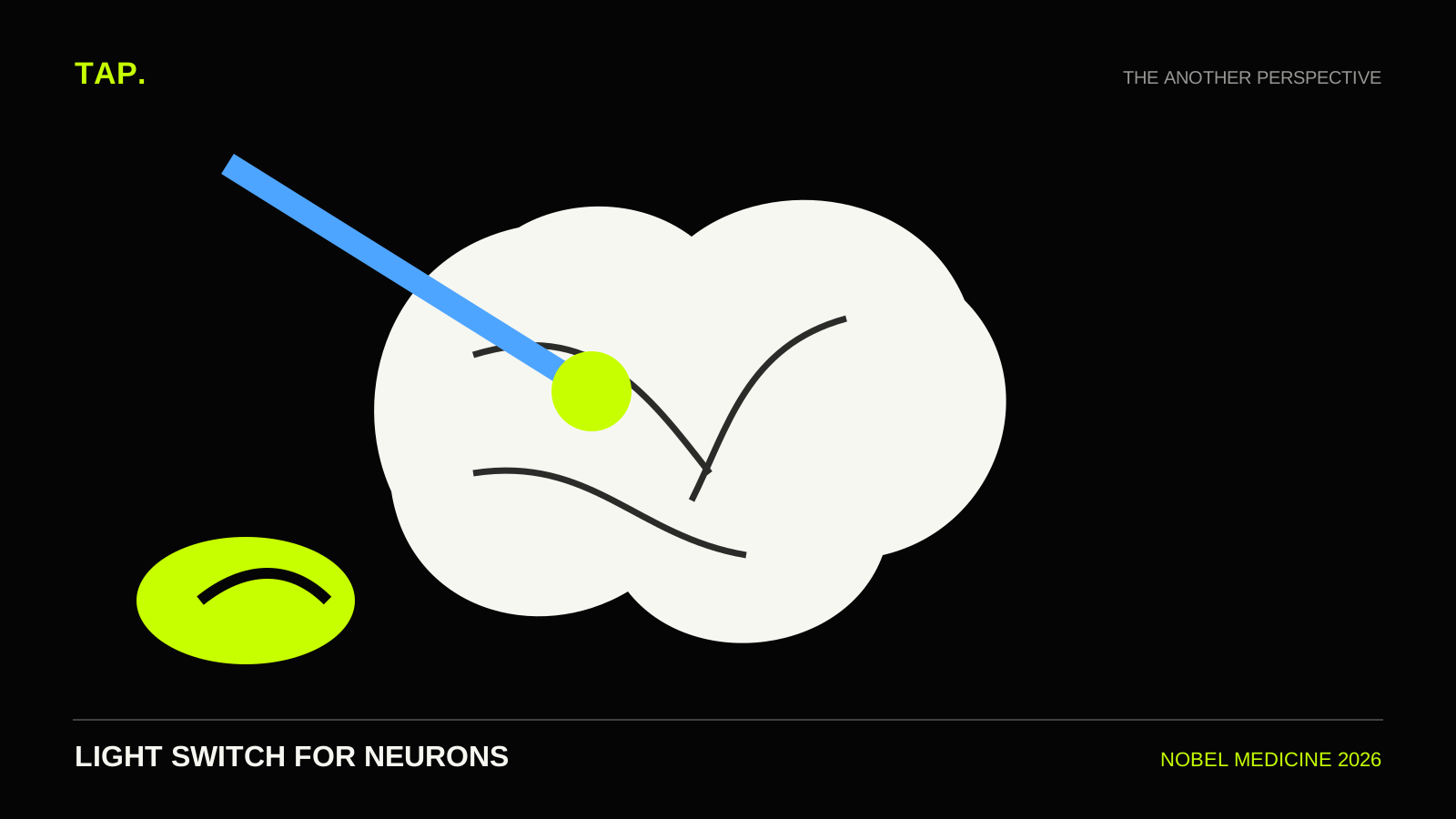
Fig. — From algae to a switch for neurons.
Some breakthroughs begin with a grand medical target. This one began with a much smaller question: how does a single-celled alga move toward light?
Peter Hegemann and Georg Nagel studied light-sensitive proteins in the alga Chlamydomonas. Their work on channelrhodopsin ultimately gave neuroscientists a way to make selected cells respond to light.
Karl Deisseroth then helped transform that biological mechanism into an experimental tool for switching neurons on and off.
The three scientists were awarded the 2026 Nobel Prize in Physiology or Medicine for the discoveries behind optogenetics.
Why neuroscience needed a better switch
For decades, researchers could observe which brain regions became active during movement, fear, memory or other behaviors. Observation was useful, but correlation leaves an obvious problem.
If a group of neurons lights up while an animal performs a behavior, are those cells causing the behavior or merely responding to it?
To test causation, scientists need a way to manipulate a specific circuit and see what changes.
The algae supplied the key component
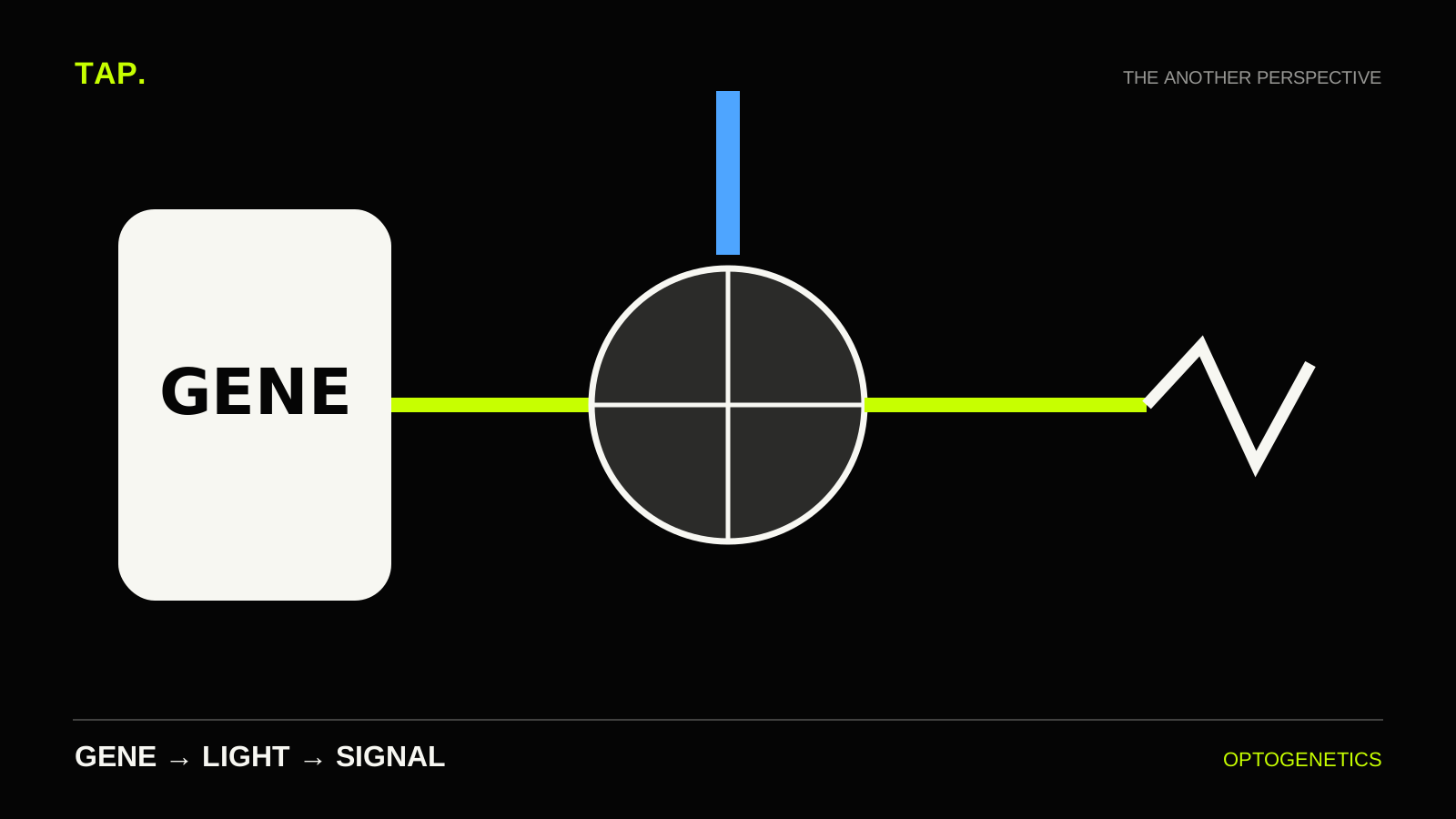
Hegemann and Nagel identified channelrhodopsin, a protein that forms an ion channel when exposed to blue light.
Put the protein into another cell and that cell can become light sensitive. When light opens the channel, charged ions move across the cell membrane and can create an electrical signal.
That is especially useful for neurons because neurons communicate through electrical activity.
Deisseroth turned the mechanism into a neuroscience tool
Karolinska Institutet says Deisseroth introduced the gene for channelrhodopsin into rat nerve cells and showed in 2005 that blue light could trigger neural signals. He later demonstrated the method in the brains of living mice.
The resulting technique became known as optogenetics: optics because it uses light, genetics because researchers use genetic methods to place light-sensitive proteins in selected cells.
Why selectivity changes the experiment
The brain is not one homogeneous electrical organ. Different cell types can be interwoven within the same physical region and perform very different jobs.
Optogenetics can target a specific population of neurons and change their activity on a very precise timescale.
That gives researchers something closer to a causal test: activate this circuit and see whether behavior changes; silence it and see what disappears.
What researchers use it for
Optogenetics has helped scientists map neural circuits involved in memory, movement, motivation, fear, social behavior and other functions.
Researchers have also explored medical applications. Karolinska notes that clinical work is investigating whether light-sensitive proteins can help restore aspects of vision in people with severe visual impairment.
But the Nobel is fundamentally about a research method, not a finished universal treatment.
Why this story is bigger than neuroscience
The path from algae to brain research is a reminder that basic science does not always know in advance what it will become useful for.
A protein that helps a microorganism respond to light can become a tool for asking causal questions about memory and behavior.
The payoff came from connecting fields that looked unrelated: microbiology, membrane proteins, genetics, optics and neuroscience.
Sources & References
How TAP sources stories →- 01news.ki.se ↗
- 02AP ↗