· 8 min read
Two molecules can look like mirror images and behave like different drugs.
Henri Kagan and Kenso Soai won the 2026 Nobel Prize in Chemistry for work that made it possible to favor one molecular mirror image over another. That matters because biology can treat two nearly identical molecules very differently.
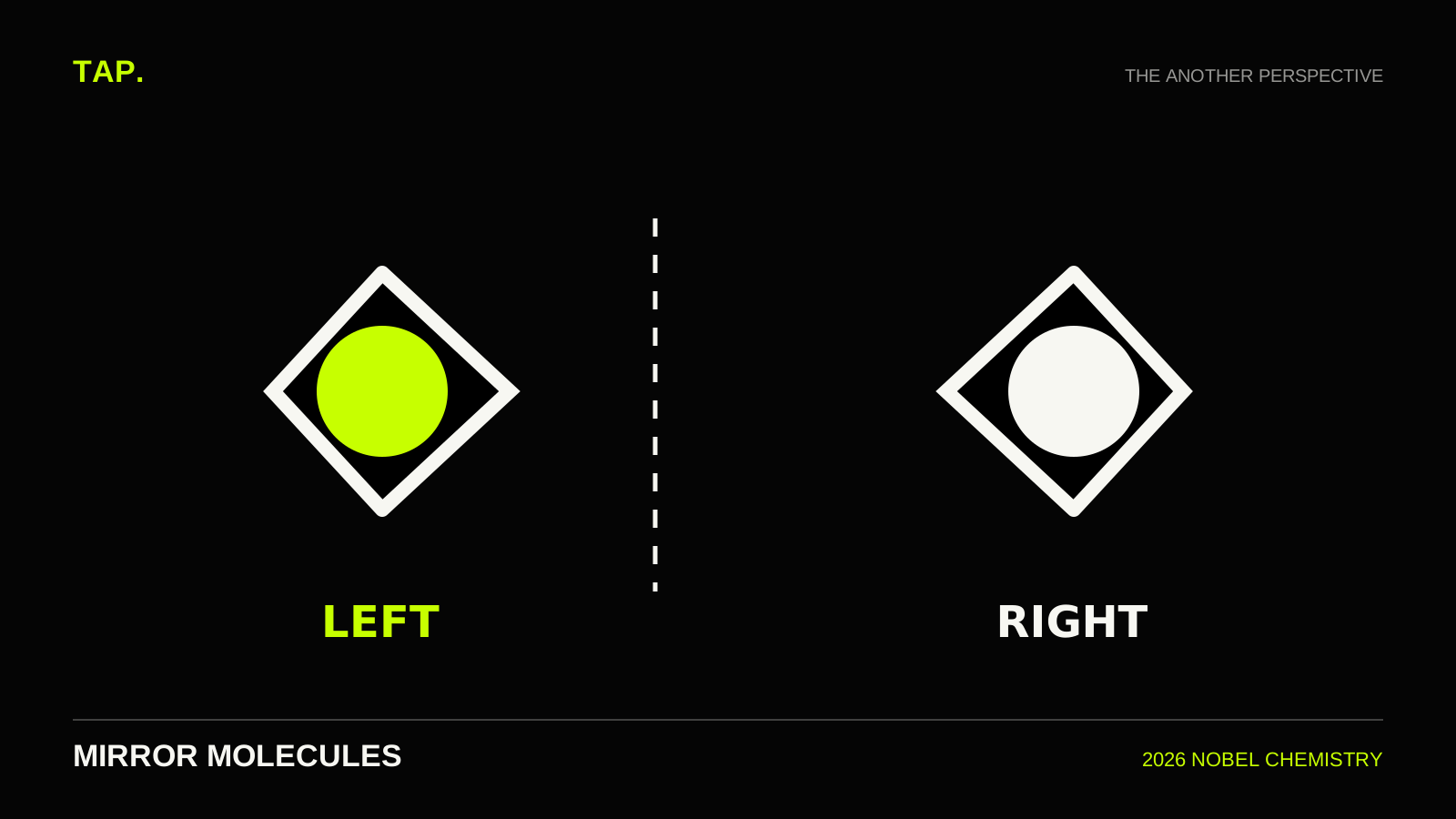
Fig. — Molecular mirror images can behave differently.
Chemistry often rewards tiny differences. The 2026 Nobel Prize in Chemistry is a particularly elegant example: two molecules can contain the same atoms, connected in the same order, and still behave differently because one is the mirror image of the other.
French chemist Henri Kagan and Japanese chemist Kenso Soai were awarded the prize for discoveries that helped chemists control which molecular mirror image a reaction produces.
2
Mirror-image forms can share a formula but interact differently with biological systems
Why chemists call molecules 'handed'
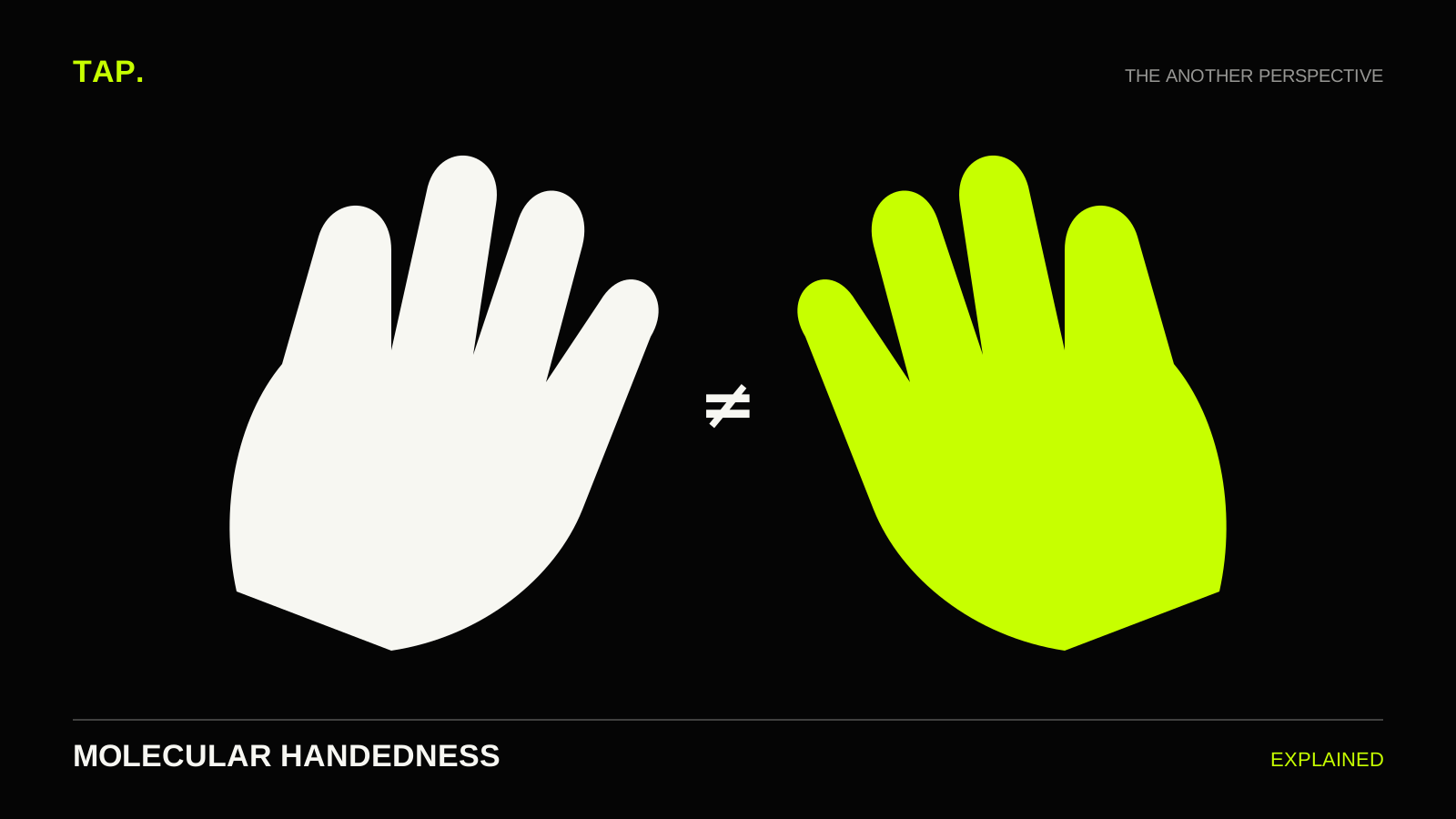
Your left and right hands contain the same basic parts, but you cannot rotate one until it perfectly overlaps the other. Some molecules have the same property.
Chemists call this chirality. The two mirror-image forms are called enantiomers.
The distinction is not visual trivia. Living organisms are themselves built from chiral molecules, so proteins and receptors can distinguish between one molecular orientation and the other.
Why that matters for medicine
A drug molecule works by interacting with biological targets that have three-dimensional shapes. One enantiomer may fit a receptor more effectively than its mirror image. The other form may be weaker, behave differently or create unwanted effects.
That makes selective synthesis important. If a pharmaceutical manufacturer needs one particular enantiomer, producing a 50-50 mixture and then separating the two forms can be wasteful and expensive.
What Kagan changed
Kagan helped establish catalytic asymmetric synthesis: chemical reactions guided by a chiral catalyst so that one mirror-image product is formed preferentially.
The idea is powerful because a small amount of catalyst can influence the handedness of a much larger amount of product.
The Nobel committee had recognized asymmetric catalysis before, including in the 2001 chemistry prize. Kagan's contribution was long considered foundational within the field.
What made Soai's reaction unusual
Soai discovered a reaction in which a chiral product can help create more of the same handed form. The process can amplify a tiny initial imbalance until one enantiomer strongly dominates.
That made the reaction scientifically interesting beyond industrial chemistry because it offered a model for thinking about one of chemistry's deeper puzzles: why life on Earth strongly prefers particular molecular handedness.
The Nobel is also about control
Modern chemistry is not only about discovering what molecules exist. It is about controlling exactly which molecule is produced, in what orientation, with what purity and at what cost.
The difference between two mirror forms can be invisible without specialized analysis. Biology may notice immediately.
That is the TAP angle: at human scale, a mirror image is a copy. At molecular scale, a mirror image can be a different instruction.