· 5 min read
Americans think AI is moving too fast. That is not the whole message.
A new AP-NORC poll finds broad concern about AI's pace. But the more interesting signal is what Americans want to protect as the technology spreads.
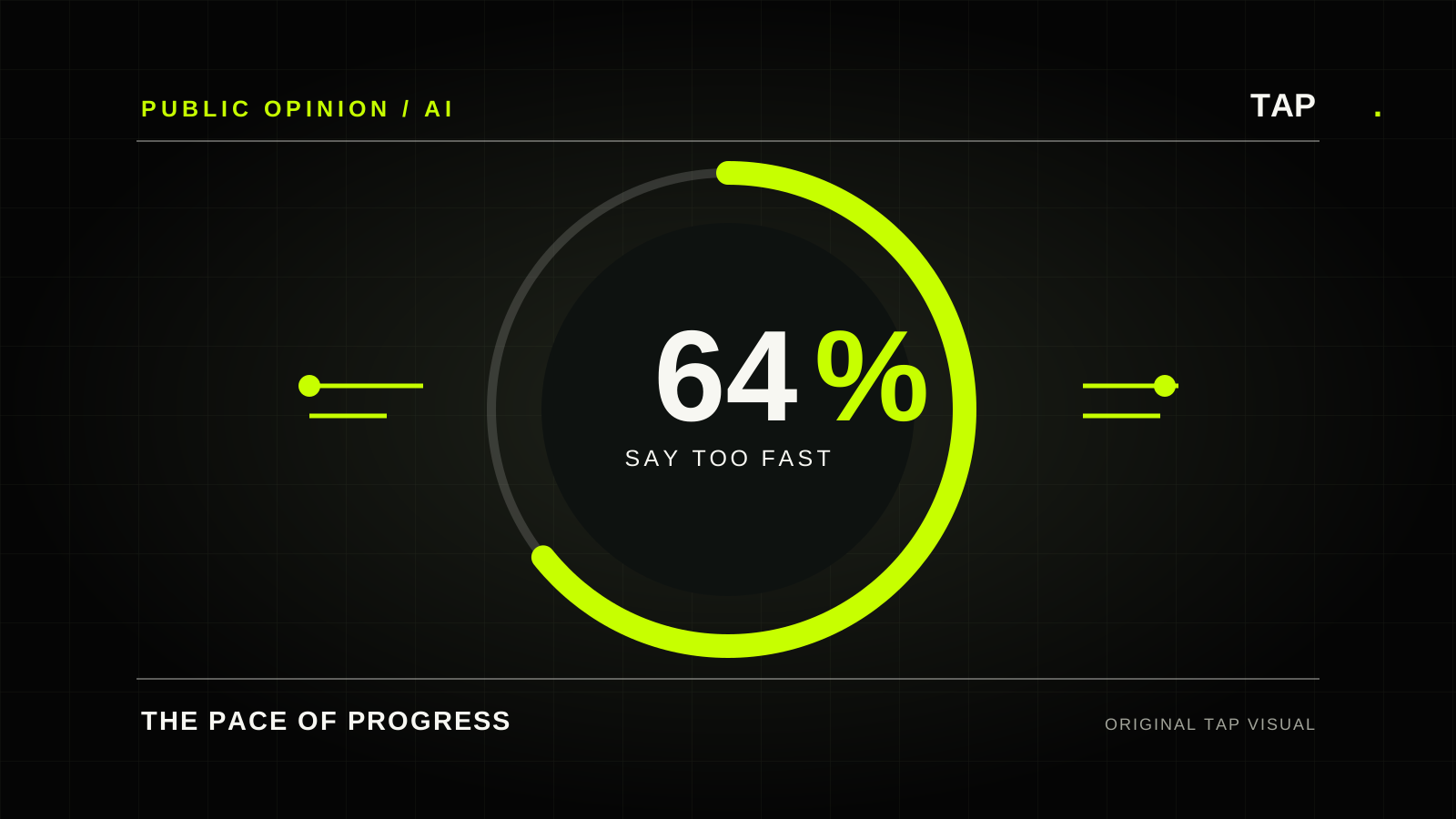
The 64% figure comes from AP-NORC's September 24–28, 2026 survey; original TAP infographic. · TAP original editorial artwork
The usual reading of a new artificial-intelligence poll is simple: Americans are frightened by a technology racing ahead of them. But that is only half the story. The survey also points toward a more practical question. Who gets to decide how quickly AI enters workplaces, public services and everyday life?
The AP-NORC Center for Public Affairs Research reported on October 8 that 64% of U.S. adults think AI technology in the United States is developing too quickly. Only 8% said it is developing too slowly, while about one-quarter said the pace is about right.
The numbers are clear. Their meaning takes more care.
In the AP-NORC survey, 76% of Democrats and 54% of Republicans said AI is moving too fast. Those are different levels of concern, but each is a majority within its party group. The broader finding is difficult to frame as a complaint belonging to only one political camp.
The researchers interviewed 2,140 adults from September 24 through 28 using a probability-based U.S. panel. The overall margin of sampling error was plus or minus 2.9 percentage points. It is a snapshot of American opinion, not a global verdict on AI.
It is not the first time this sentiment has appeared. A separate Pew Research Center survey fielded in February 2026 found that 63% of U.S. adults thought AI was advancing too quickly. The figures are close, but the surveys asked their own questions, used their own methods and were carried out months apart. They should not be treated as a single continuous trend line.
The real demand may be about control
AP-NORC found broad support for government priorities that keep AI under human control and protect workers. That matters because describing an AI system as fast does not explain what a respondent wants to happen next. One person may want tougher safety testing; another may want worker retraining; a third may want clearer rules for critical decisions.
A speed question is therefore an imperfect substitute for a policy question. The poll does not establish that 64% want all AI research stopped, nor does it identify one regulation endorsed by that entire group. It does show that many Americans are uneasy with the current direction.
That tension is worth taking seriously. Faster models may improve useful tools, while rapid deployment can also produce new costs, mistakes or power imbalances. A public debate that reduces the choice to 'innovation or fear' misses the possibility that people may want both innovation and accountability.
Trust is part of the story
Public skepticism extends beyond technology companies. AP-NORC reported that 39% of adults trust neither of the two major U.S. political parties to handle AI well. That does not tell us what a successful policy would look like, but it helps explain why promises about safety or economic benefits may be met with suspicion.
The people most affected by changes in work, information and public services cannot necessarily decide how a product is trained, rolled out or corrected. The more consequential AI becomes, the more that accountability gap may matter.
What to watch next
The interesting next question is not simply whether another model beats a benchmark. It is whether employers, technology companies and governments offer convincing ways to test automated decisions, challenge errors, protect workers and preserve meaningful human oversight.
For TAP, the overlooked message is this: public concern about AI's pace should not automatically be read as opposition to technological progress. It can also be read as a request to have a say in how that progress reaches people.
Source note: The AP-NORC figures were published October 8, 2026, from interviews conducted September 24–28. The separate Pew figure is from a February 2026 survey published June 17; these are not identical instruments.