· 5 min read
When a data center becomes a target, the internet's physical foundations come into view.
Yandex reported a second Russian data-center strike within two days. The damage highlights the physical vulnerability of cloud services and AI research infrastructure during war.
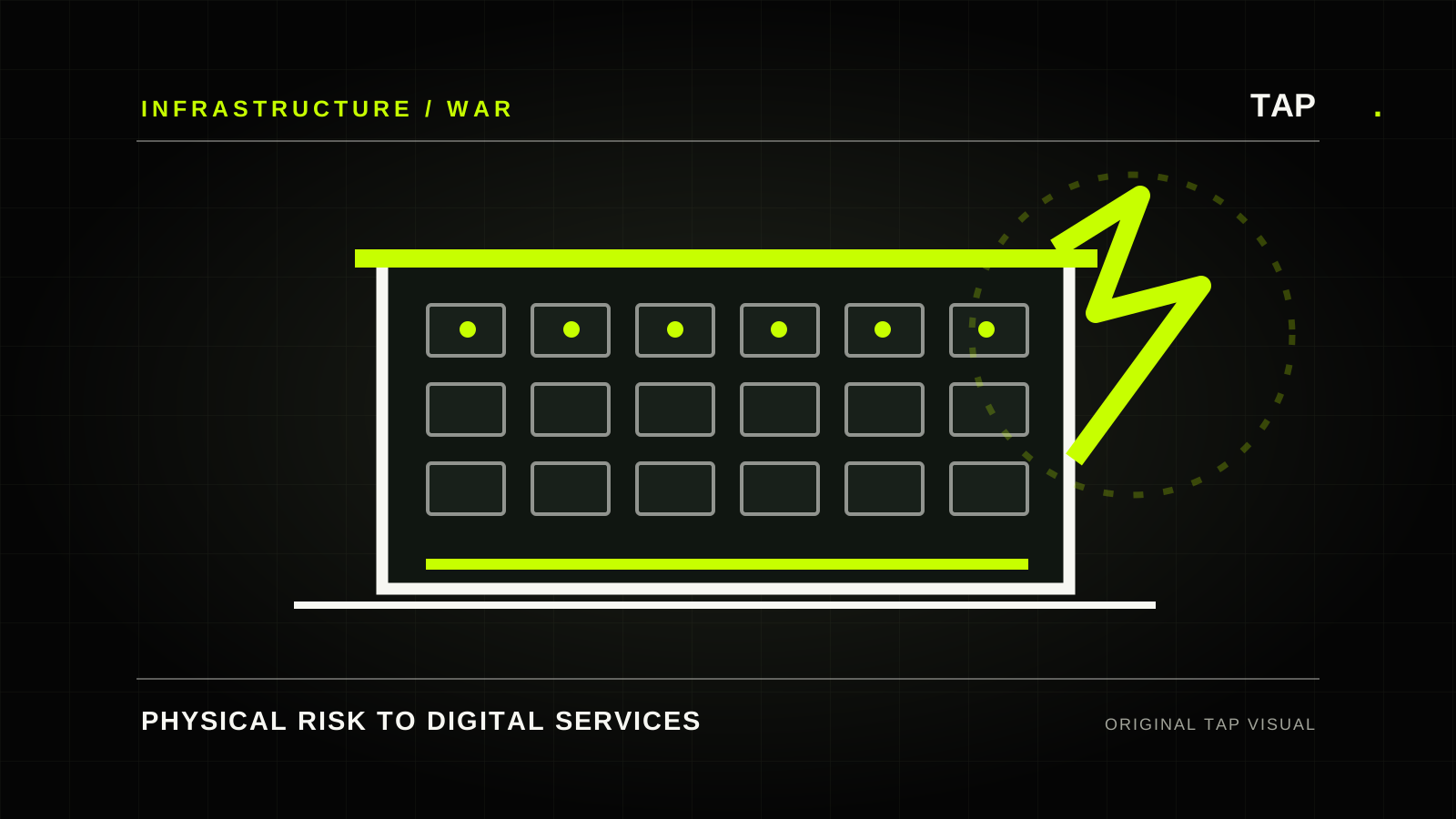
Illustrative physical-risk graphic; does not depict or verify damage at any Yandex site. · TAP original editorial artwork
People tend to picture internet attacks as stolen passwords or malware on a screen. In war, the same services can become vulnerable for a more physical reason: the servers must exist somewhere, and buildings can be hit.
Russian technology company Yandex said on October 9 that a second of its data centers had been struck by a drone. Reuters reported damage to modules at the Kaluga-region facility, following another incident reported the previous day in the Ryazan region.
Update as of October 11: Reuters subsequently reported a third Yandex data center had been shut down following a drone strike in the Vladimir region. The two-site account below describes the earlier October 8–9 reports, not the final number of affected facilities.
Two facilities, two days
Reuters described the earlier Ryazan incident as causing a fire and leaving the operator assessing damage to computing equipment. The site is consequential because it houses major hardware used for Yandex's AI development, including two of the company's three supercomputers identified in reporting.
That location detail should not become a claim that those supercomputers were destroyed. Their specific condition and recoverability were not established in the source reports. The newer Kaluga incident introduced a second operational concern, with the company warning of possible service disruptions.
The cloud has an address
A data center combines electricity, cooling, network connectivity and dense racks of hardware. Redundant systems can help, but no architecture abolishes physical risk. Hardware can be damaged, power can be interrupted and specialists may be unable to access a site safely during an ongoing conflict.
This is why modern digital resilience is not exclusively a software-security problem. The physical location, geographic redundancy and recoverability of infrastructure also matter. Those questions become more urgent when facilities support many services or expensive AI-training systems.
What we know—and what we don't
Reuters attributed the reported strikes and damage assessments to the company and related officials. As of October 9, the public information did not establish the full duration of every potential service impact or the final state of the affected equipment.
It is tempting to frame an attack on an AI data center as an immediate blow to every AI system hosted there. That would be a larger conclusion than the evidence supports. TAP should distinguish the fact of damaged facilities, the company's warnings and any later independently confirmed effects.
The larger perspective
The geopolitical significance extends beyond a single operator. States, businesses and people increasingly depend on systems concentrated in tangible sites. In conflict, those sites may be treated like other strategic infrastructure.
That raises questions about the protection of digital facilities, the recovery of data and the resilience of services that civilians use. The internet may be distributed in design, but individual parts of it are still vulnerable places in the real world.
The threat did not stop at two sites
Reuters' October 11 reporting described another Yandex facility in the Vladimir region being shut following a drone attack, with the company reporting no injuries. This later development reinforces that the October 9 two-site account was only a snapshot of an evolving situation.
The reported additional disruption does not prove that every Yandex system failed or that all affected AI servers were destroyed. The important lesson remains the same: organizations must plan to recover both physical hardware and the services that depend on it when a regional incident spreads across several facilities.