· 4 min read
SpaceX wants to be your mobile carrier. It still needs the ground.
A new spectrum agreement shows why future satellite mobile services will still depend on ground infrastructure.
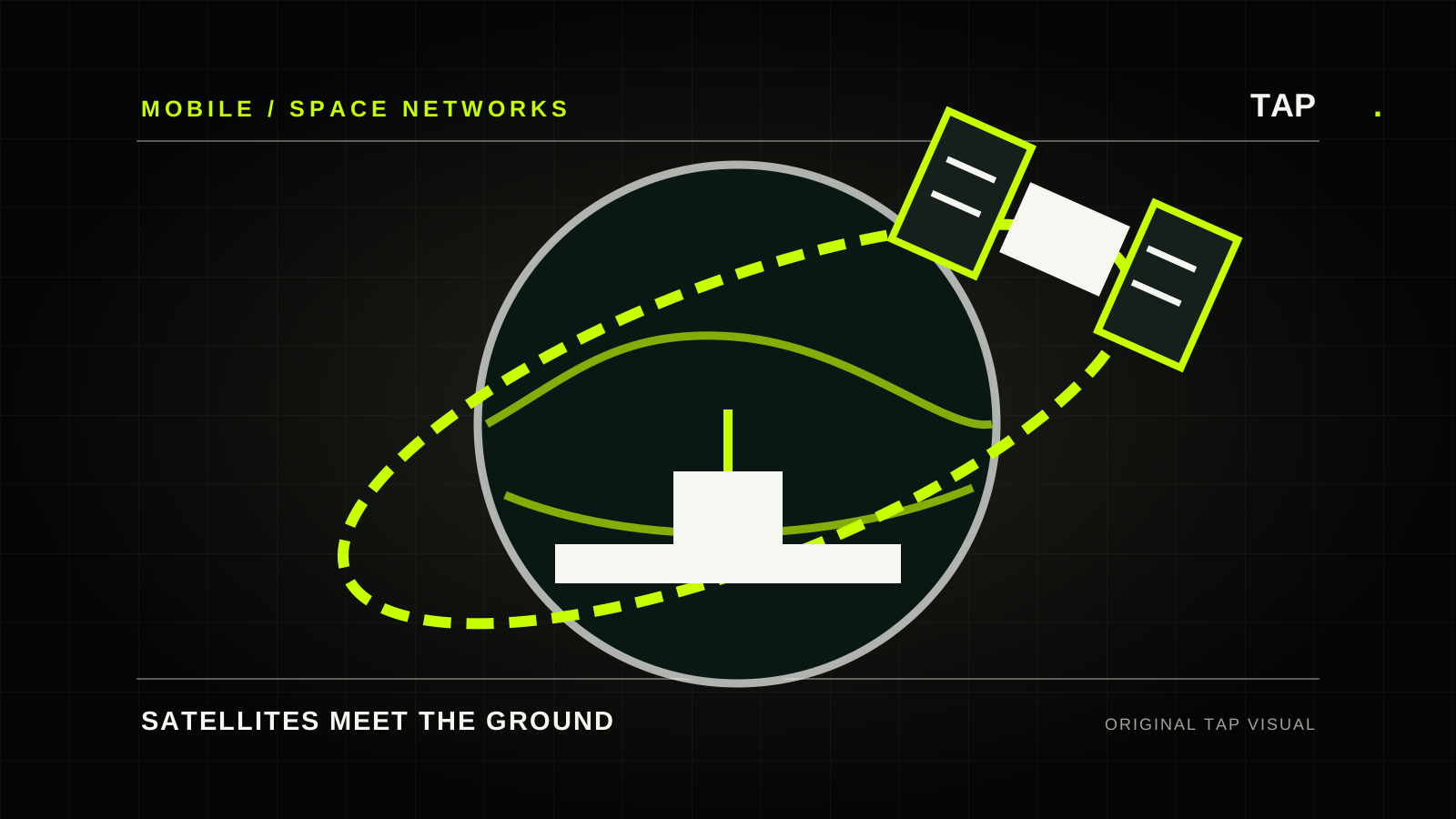
Illustrative hybrid satellite and terrestrial network; not a completed Starlink Mobile deployment. · TAP original editorial artwork
SpaceX's latest Starlink Mobile announcement sounds like a challenge to ordinary phone networks. But the important detail is not a rocket. It is access to radio spectrum.
On October 8 SpaceX announced a nationwide low-band spectrum agreement. A separate federal decision authorized a new satellite system. Neither means a new retail mobile network is already live.
The real purchase is the airwaves
SpaceX agreed to acquire up to 14 megahertz of paired 800 MHz spectrum. Low frequencies can reach farther and penetrate obstacles better. The company expects improved indoor coverage, but this is a plan, not a measured result.
SpaceX says it must receive final FCC approval before carrying out the new combined network plan. Reuters also reported the spectrum transaction. A commercial agreement is not a newly launched retail phone service, and no verified service date accompanies the announcement.
Compared with a satellite-only offering, lower-frequency airwaves may help signals travel through walls and reach people indoors. But neither indoor coverage nor pricing can be assumed from a press release. They depend on how the terrestrial layer is built and the network operates in real conditions.
Authorization is not deployment
In its October 8 update, SpaceX said that the FCC had authorized its next-generation Starlink Mobile satellite plan involving 15,000 spacecraft. That is a regulatory milestone, not proof those satellites have already launched or that the eventual capacity is available to subscribers.
The announcement distinguishes approval of the satellite constellation from the still-pending separate 800 MHz spectrum transaction. The regulatory processes should not be presented as one completed approval for the entire proposed phone network.
Its marketing promises include improved indoor coverage from low-band spectrum, while higher-band satellite signals could serve other uses. For consumers, the relevant test is not how many future spacecraft a company may launch, but whether a standard handset can reliably connect under the final commercial terms.
Why the ground still matters
SpaceX's own statement describes a hybrid network combining satellites and terrestrial infrastructure. Ground networks remain useful for dense demand, indoor coverage and capacity. Satellites may extend coverage in remote places and during some outages.
TAP's perspective: this story is not the end of cell towers. It is about spectrum rights, regulatory conditions and whether a hybrid network can deliver real coverage, reliable service and competitive prices.
Network capacity, customer support, roaming arrangements and local regulations all matter after a new spectrum portfolio changes hands. Existing operators own extensive terrestrial assets and established customer relationships. Starlink's planned hybrid approach may make competition more serious over time, but an emerging plan is not yet a nationwide replacement for those networks.