· 7 min read
Brazil voted on Sunday. Markets voted on Monday.
Flávio Bolsonaro led Brazil’s first-round presidential vote 47% to 45% over Luiz Inácio Lula da Silva. The next trading session, Brazilian stocks surged. The useful question is not which candidate markets ‘like’. It is which policy probabilities investors suddenly changed.
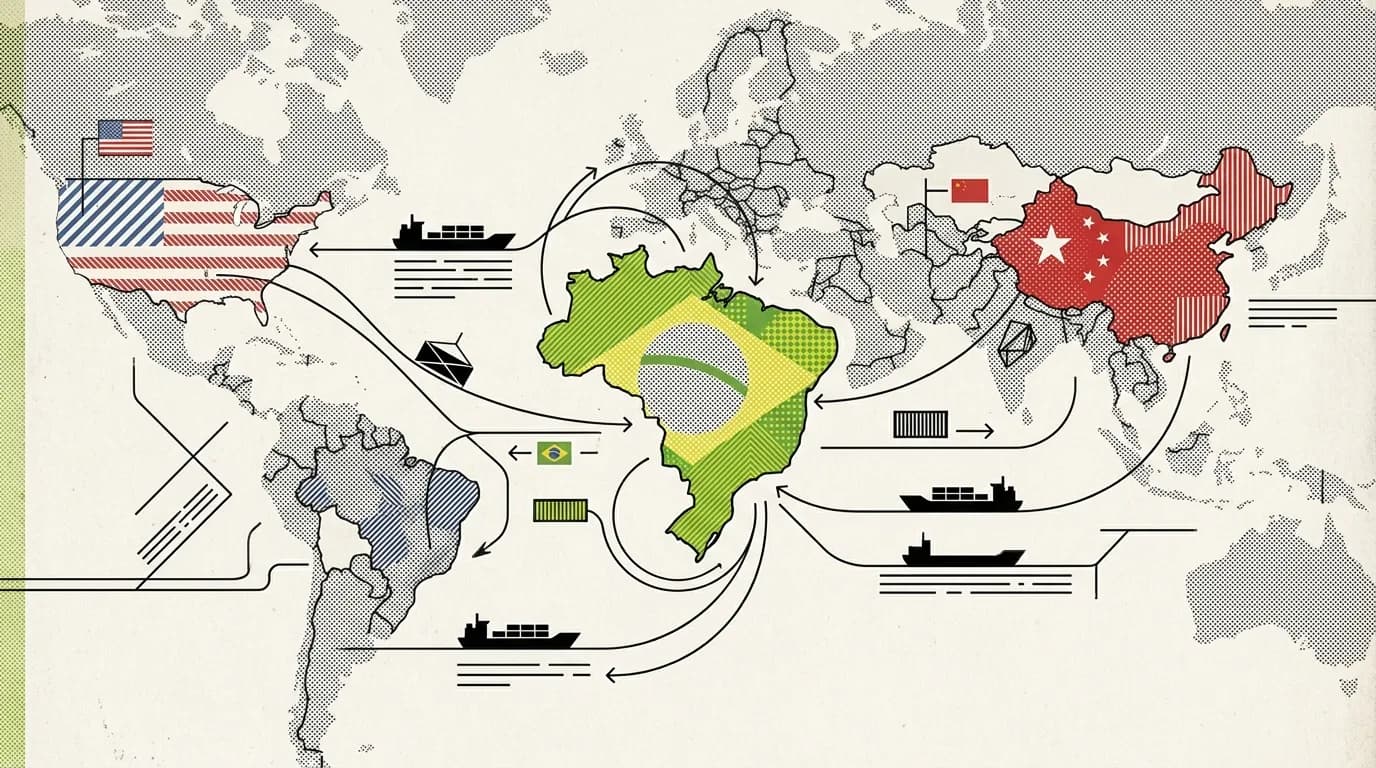
Fig. — A political result becomes a market price.
An election result is a political fact. A market move is a price. Put them next to each other and it is tempting to turn the combination into a verdict: investors approve of one candidate and reject the other.
That is usually too simple.
Brazil’s first-round presidential vote gave investors a much clearer picture of the race than pre-election polling had. Flávio Bolsonaro finished first with about 47% of the vote, ahead of President Luiz Inácio Lula da Silva on about 45%. Neither crossed 50%, so the election moves to a runoff on October 25.
47%
Flávio Bolsonaro’s first-round share, versus roughly 45% for Lula
The following trading session, Brazil’s Bovespa stock index jumped 7.7% to a record close, according to Reuters. The real strengthened, and Brazilian shares listed in the United States also rallied.
The speed of that reaction makes the market story look emotional. In practice, markets were doing what they always do after a surprise: repricing a set of future possibilities.
Markets do not vote. They price scenarios.
Investors are not one political bloc. A pension fund, a hedge fund, a bank, a foreign asset manager and a local retail investor can all buy Brazilian assets for completely different reasons.
What they share is a need to estimate future cash flows, interest rates, taxes, public spending, regulation and the probability that policies actually pass.
That last part matters in Brazil because the presidential race was not the only result. Bolsonaro’s Liberal Party also made major congressional gains. Reuters reported that the party increased its Senate representation and was projected to become much stronger in the lower house.
For markets, a president with a more cooperative Congress can matter as much as the president’s campaign language. A tax reform that cannot pass is just a speech. A spending cut that cannot survive Congress is just a proposal. Political alignment changes the probability that ideas become law.
Why a stock index can jump before anything has changed
Nothing fundamental about a Brazilian company’s factories, customers or inventory changed between Sunday night and Monday morning. What changed was the discount investors applied to the future.
Imagine a company expected to earn the same amount of money under two governments. If investors think one government is more likely to lower financing costs, reduce policy uncertainty or support business-friendly reforms, they may be willing to pay more for those same future earnings today.
That is one reason election surprises can move markets violently. The price is not reacting to a policy that already happened. It is reacting to a new probability map.
Reuters reported that J.P. Morgan moved Brazilian equities to an overweight recommendation after the first round, citing a more favorable political environment. That does not mean the outcome is settled. It means some investors concluded that the distribution of possible outcomes had shifted enough to justify different prices.
The rally is not a prediction machine
There is a second mistake to avoid: assuming the market now knows who will win.
A runoff creates a new election. Turnout can change. Endorsements can move. Campaign mistakes matter. Voters who backed eliminated candidates have to choose again, stay home or spoil their ballots.
AP reported that both campaigns are now trying to reach voters outside their core bases, while high abstention in the first round makes turnout especially important. A two-point first-round gap is meaningful, but it is not the same thing as a finished result.
Markets can be very good at absorbing new information quickly. They can also be wrong very quickly.
The more interesting signal is what investors are afraid of
A rally tells you more when you ask what risk premium just disappeared.
In Brazil’s case, the move suggests investors became less worried about some combination of fiscal policy, legislative gridlock and the ability of a future government to pass reforms. That is different from saying investors endorsed every part of Bolsonaro’s platform, or that a Bolsonaro presidency would automatically produce better economic outcomes.
It also works in reverse. If Lula recovers in the runoff, markets may reprice again. If Bolsonaro wins but the expected reforms prove politically difficult, the rally can unwind. If global interest rates or commodity prices move sharply, domestic politics may stop being the main driver altogether.
The election result gave Brazil two presidential finalists.
The market reaction revealed something else: which future investors suddenly considered more likely, and how much they were willing to pay for it.