· 7 min read
A bond yield just hit a 24-year high. Why should anyone outside Wall Street care?
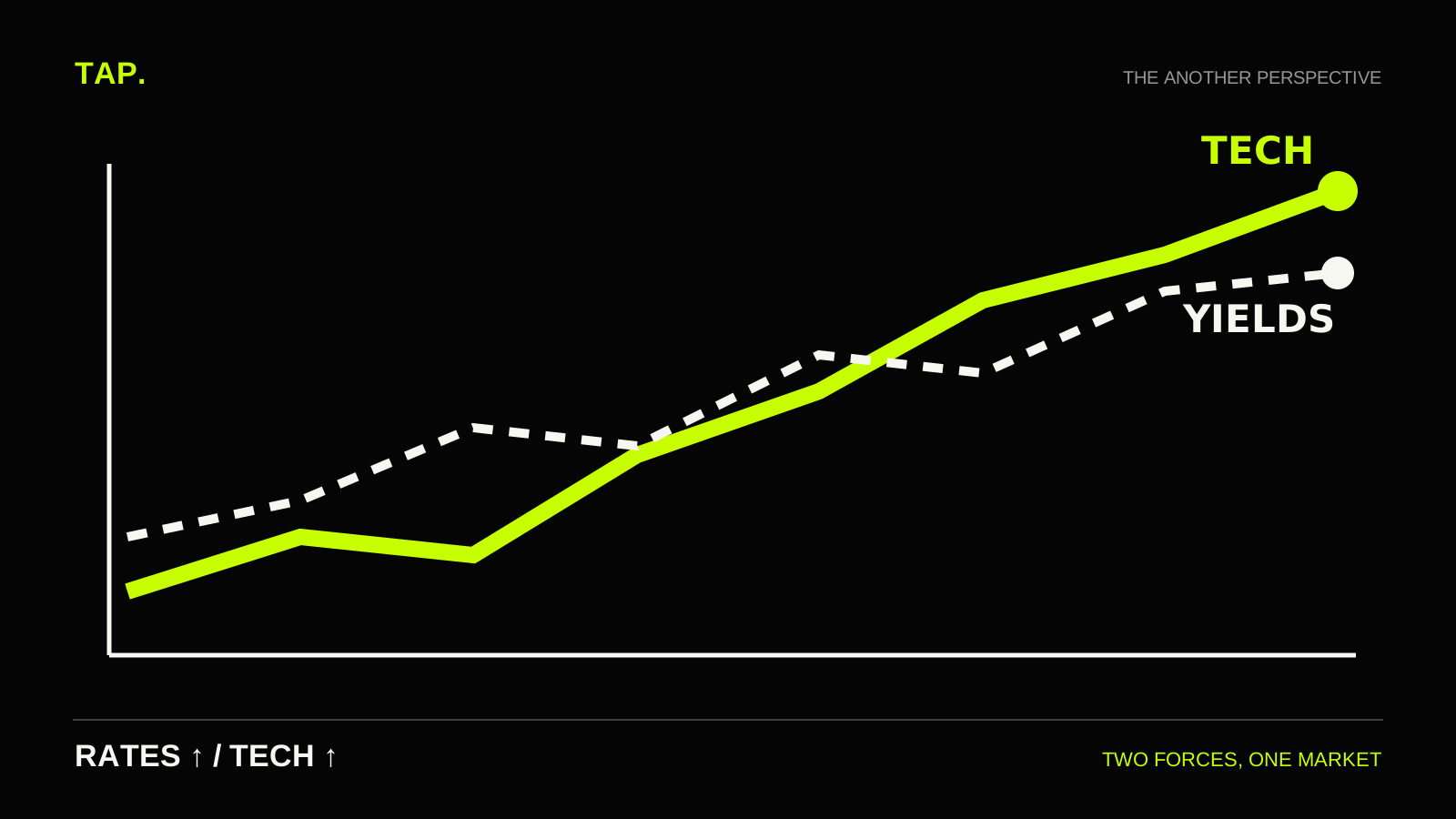
The U.S. 10-year Treasury yield briefly touched 5.34%, its highest level since 2002. That number lives in the bond market, but its effects reach mortgages, business loans, government budgets and the price investors put on almost everything else.
Fig. — A high watermark.
Bond markets have a talent for sounding important while remaining completely abstract.
This week made them harder to ignore.
The yield on the U.S. 10-year Treasury briefly reached 5.34%, its highest level since 2002, during a global selloff in government bonds. Yields also climbed sharply in Europe and Japan.
If you do not trade bonds, that can sound like a distant Wall Street event.
It is not.
The 10-year Treasury is one of the reference prices around which huge parts of the financial system are organized. When its yield rises, it becomes more expensive for governments, companies and households to borrow.
The mechanics of borrowing
Start with the basic mechanics.
A bond is essentially an IOU. When investors sell existing bonds, their prices fall. Because the payments on those bonds are fixed, the yield available to a new buyer rises.
That rising yield is the market saying: if you want me to lock up money for years, you need to pay me more.
Why are investors demanding more now?
There is no single reason.
Inflation remains a concern. Energy prices have added pressure. Governments are issuing large amounts of debt. Central banks have given investors fewer reasons to expect quick rate cuts.
Then there is AI.
Reuters reports that Alphabet, Amazon and Microsoft have issued roughly $220 billion in debt in 2026 as the technology industry pours money into data centers and AI infrastructure. That corporate borrowing joins enormous government financing needs, adding more supply to markets already asking who is going to absorb all the new debt.
The chain reaction
The effects move outward.
Mortgage rates do not mechanically copy the 10-year Treasury, but they are heavily influenced by longer-term interest rates. Higher yields can therefore make home loans more expensive or slow the relief borrowers were hoping to get from lower rates.
Companies face the same problem. A business deciding whether to build a factory, open stores or finance an acquisition has to compare the expected return with the cost of money. When borrowing costs rise, fewer projects look attractive.
Governments are exposed too.
A government can carry a large debt load more comfortably when refinancing is cheap. When yields stay high, more tax revenue has to be directed toward interest instead of services, infrastructure or tax cuts.
That is why investors sometimes talk about “bond vigilantes.” The phrase describes markets effectively punishing governments they believe are borrowing too much or doing too little to control inflation.
The strange part is that higher yields do not automatically mean the economy is collapsing.
Sometimes they rise because growth is strong. Investors may expect businesses to keep investing, consumers to keep spending and inflation to remain sticky. That is one reason this moment feels unusual: strong AI investment and corporate profits are existing alongside much tighter financing conditions.
For ordinary people, the important thing is not the drama of a trading screen.
It is the chain reaction.
A few tenths of a percentage point in a giant bond market can influence the cost of a mortgage, the rate on a business loan, the valuation of a technology stock and the amount a government spends simply servicing old debt.
The bond market looks like a market for pieces of paper.
In practice, it is one of the places where the price of money is decided.