· 9 min read
A few narrow stretches of water can still move the price of almost everything.
Energy companies are reconsidering a just-in-time export system after disruptions around the Strait of Hormuz and Bab el-Mandeb. The lesson is bigger than oil: global supply chains can be efficient and still be fragile.
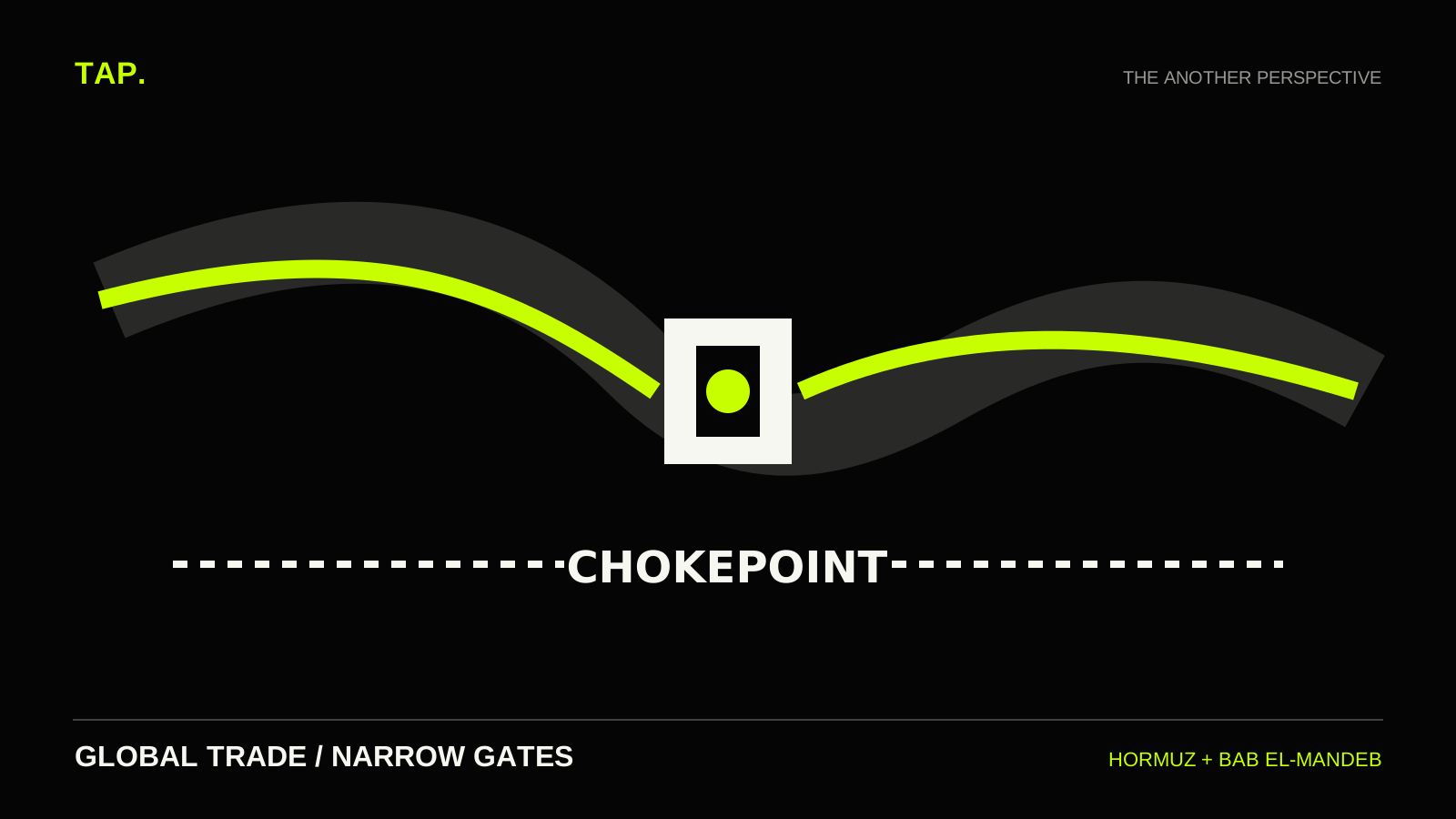
Fig. — Global trade, narrow gates.
The global oil industry has pipelines, supertankers, storage hubs, refineries and ports spread across continents.
Yet a disruption in one narrow waterway can still change fuel prices thousands of kilometres away.
That is because global energy trade contains chokepoints: geographic passages through which a large volume of supply has to travel.
Two names matter repeatedly
The Strait of Hormuz connects the Persian Gulf with the Gulf of Oman. The Bab el-Mandeb connects the Red Sea with the Gulf of Aden.
Both sit on routes that link major energy producers with consumers in Asia, Europe and beyond.
If traffic through one of these passages is disrupted, cargoes may be delayed, rerouted or removed from the market temporarily.
Why the price moves before the barrels disappear
Commodity prices do not wait for a physical shortage to become obvious.
Traders price the probability of future disruption. If insurance costs rise, ships are delayed or companies fear that a route could close, the expected cost of delivering oil increases.
That risk premium can show up in market prices quickly.
The industry is rediscovering redundancy
Reuters reported that senior oil executives are calling for more alternative export routes after disruptions tied to conflict around major shipping lanes.
The language is telling: the industry is moving from 'just in time' toward 'just in case.'
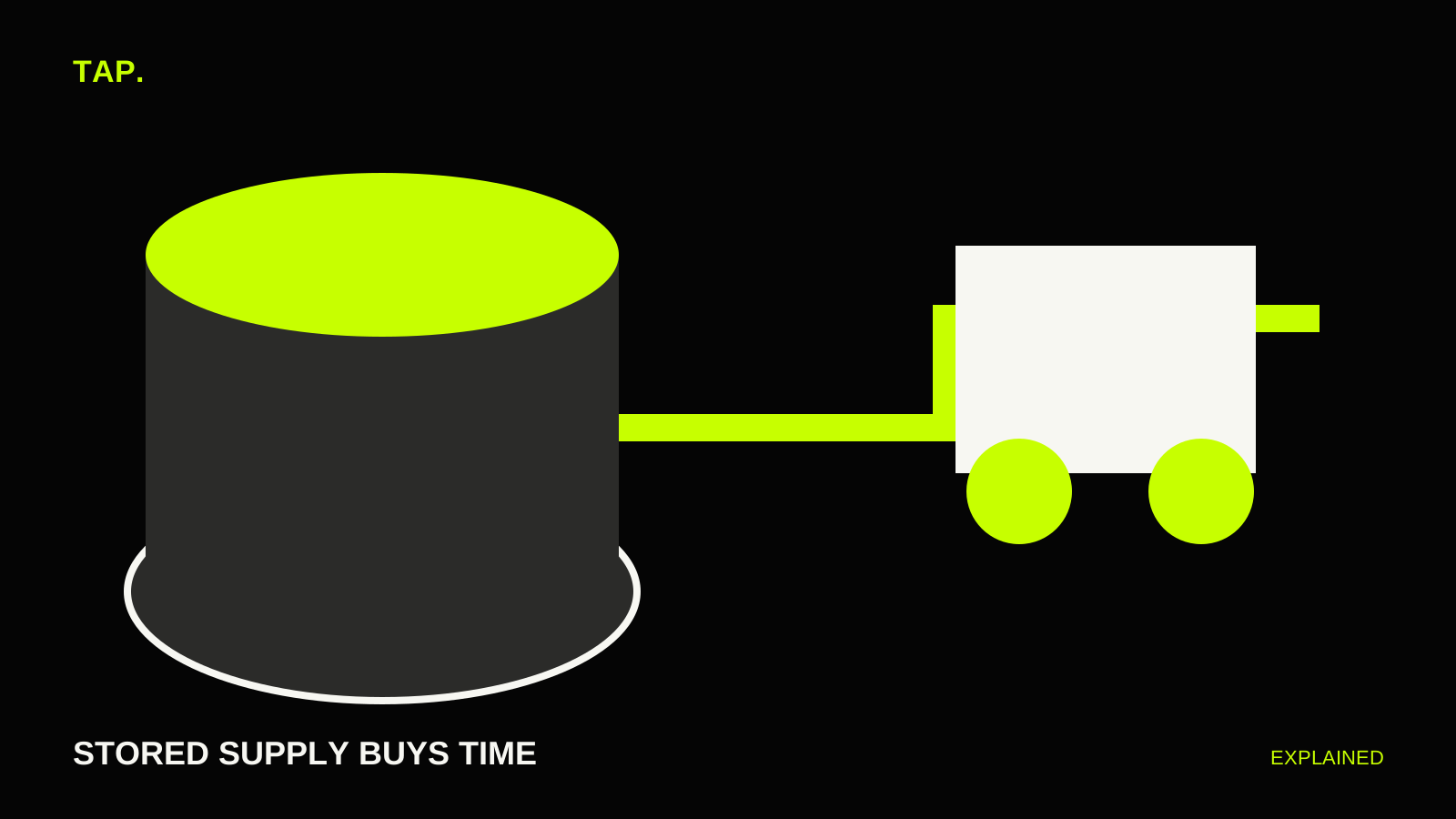
Just-in-time systems minimize idle capacity and inventory. They are efficient when transport works smoothly.
Just-in-case systems accept some extra cost in exchange for alternatives: more storage, more routes, spare capacity or infrastructure that may not be used every day.
Why pipelines matter
A pipeline that bypasses a vulnerable strait can give a producer another outlet when shipping routes become risky.
The United Arab Emirates already has infrastructure that can move some oil to Fujairah outside the Strait of Hormuz. Other proposals involve reviving or expanding routes from Iraq toward the Mediterranean.
The difficult part is economics. Backup infrastructure is valuable during a crisis but can look expensive during normal periods.
The cost spreads beyond petrol stations
Oil is embedded in transport, shipping, aviation, petrochemicals and many industrial supply chains.
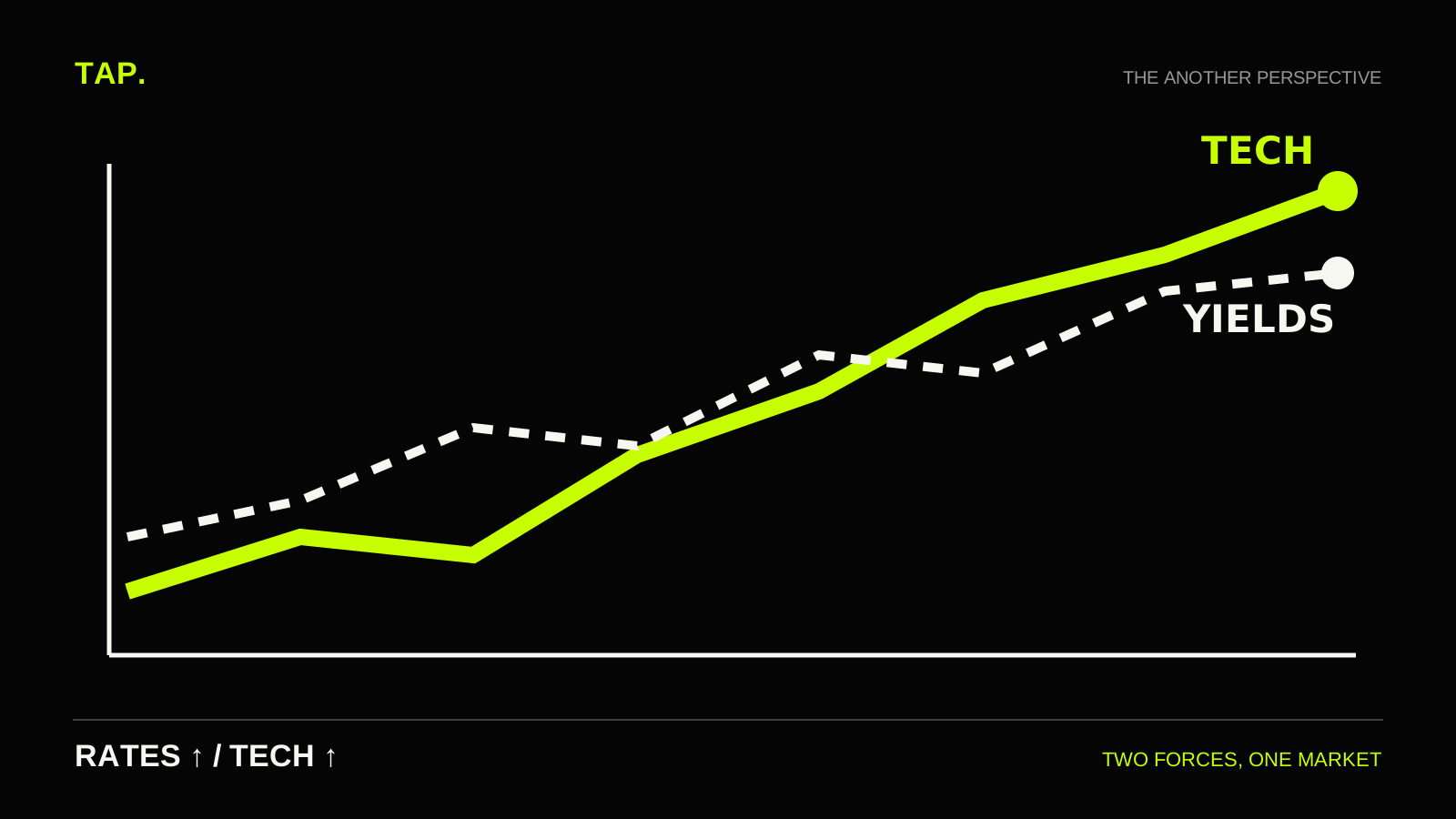
A sustained oil-price increase can therefore raise freight and production costs, contribute to inflation and complicate central-bank decisions.
Countries that import most of their energy can also see pressure on currencies and trade balances.
This is really a resilience story
The deeper lesson is not that globalization failed.
It is that efficient networks often concentrate risk.
The same logic applies to semiconductors, undersea internet cables, ports, rare minerals and cloud infrastructure. Systems become cheaper when they remove duplication, but duplication is exactly what helps when something breaks.
A chokepoint is where efficiency becomes visible as dependence.