· 7 min read
Bond yields are high. Tech stocks are still breaking records. That is not as contradictory as it looks.
Higher long-term interest rates usually make distant future profits less valuable. Yet AI-linked technology shares have kept climbing. The reason is that markets price several forces at once: rates, earnings, growth expectations and risk.
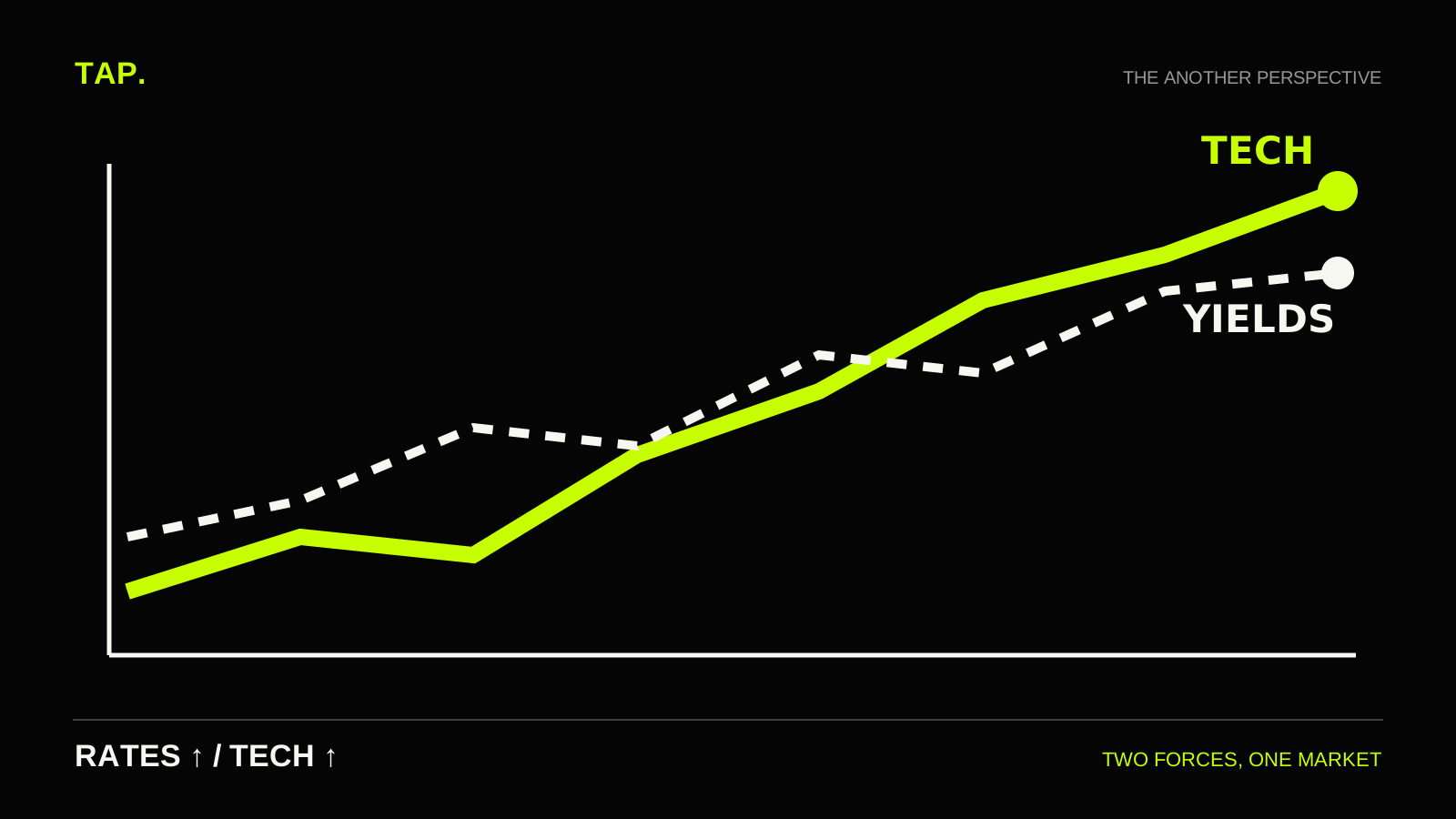
Fig. — Two forces can rise at the same time.
Finance textbooks give investors a clean relationship: when interest rates rise, expensive growth stocks should become less attractive.
The market rarely stays that clean for long.
In early October 2026, long-term U.S. Treasury yields were near levels not seen since 2002 while the Nasdaq was also reaching records. Nvidia's market value was approaching $6 trillion as investors continued to bet on AI-driven earnings growth.
Why higher yields usually hurt growth stocks
A share price is partly a claim on profits that may arrive years in the future.
When investors discount those future profits back to today's value, a higher interest rate usually reduces what they are worth today. That effect is especially important for companies whose valuation depends heavily on distant future growth.
But the discount rate is only one side of the equation
The other side is the size of the profits investors expect.
If investors suddenly believe a company will earn much more money than previously expected, higher profit forecasts can offset the pressure from a higher discount rate.
That is what makes an AI boom unusual. The same investment cycle that can contribute to inflation pressure and higher yields can also create enormous revenue expectations for chipmakers, cloud companies, power suppliers and software firms.
Markets can price growth and inflation at the same time
Reuters described this tension in October: bond markets were under pressure while AI-linked technology shares continued to advance.
That is not the market contradicting itself. Different assets are responding to different parts of the same economic story.
Bond investors may demand more compensation for inflation, fiscal risk or stronger nominal growth. Equity investors may simultaneously believe certain companies will capture an unusually large share of that growth.
The risk is expectation, not only valuation
A high valuation does not automatically mean a stock must fall. It means the company has less room to disappoint.
If earnings growth arrives faster than expected, the valuation can look less extreme with time. If revenue, margins or AI demand fail to match expectations, the same high starting price can amplify the downside.
Why this matters outside Wall Street
The interaction between yields and AI stocks tells us something about the broader economy.
AI investment is large enough to influence demand for chips, construction, power and financing. At the same time, higher borrowing costs affect mortgages, governments and businesses far beyond the technology sector.
The two stories are connected.
The useful question is not 'Which market is right?' It is 'What assumptions would have to be true for both markets to stay where they are?'
Right now, one of those assumptions is that AI-related earnings can grow fast enough to outrun a much less forgiving interest-rate environment.