· 3 min read
The Factory Computers Behind a $675 Million AI Deal
Omron agreed to acquire OnLogic's parent. The deal points to local computing as an industrial AI priority.
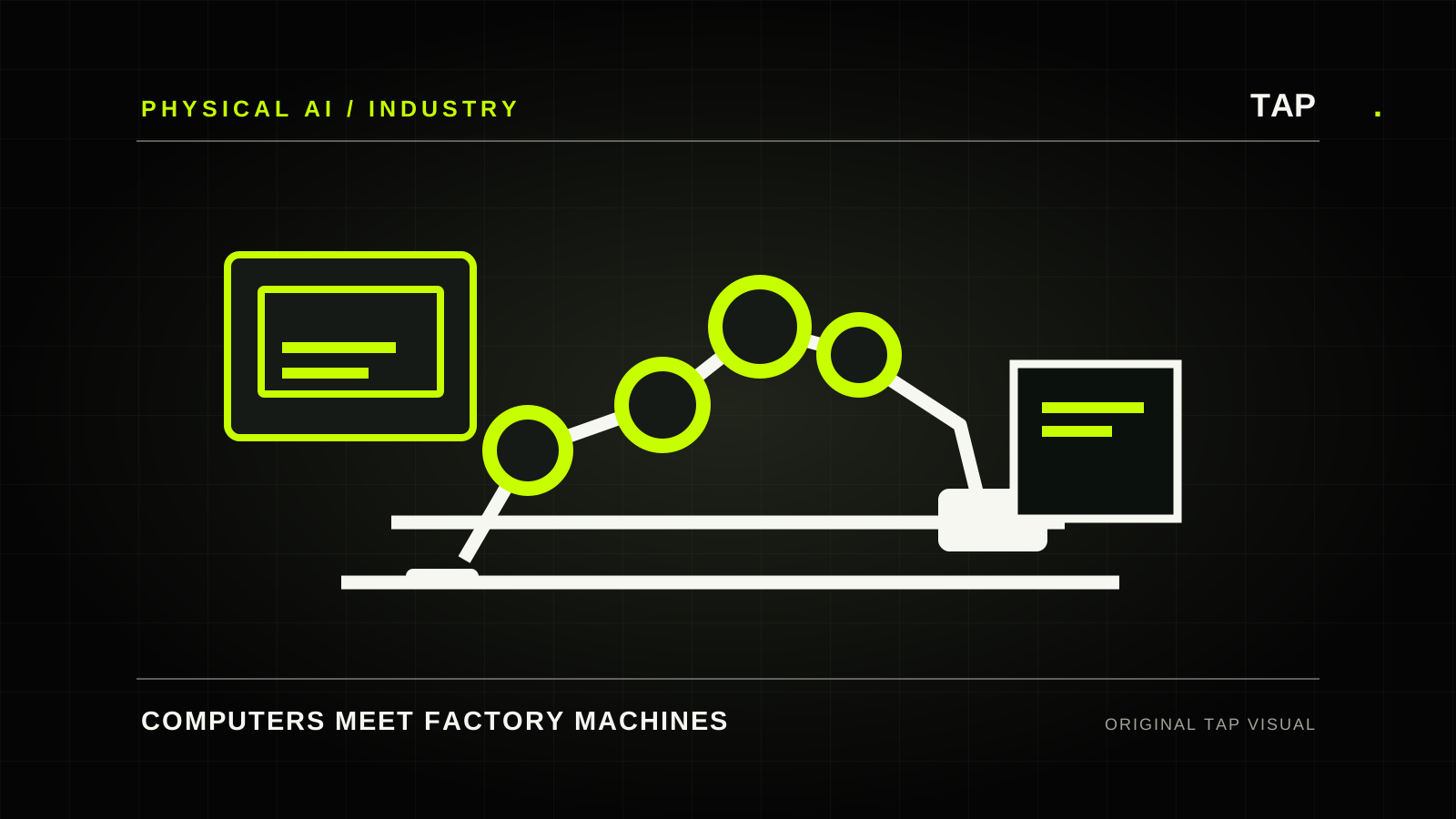
TAP illustration of physical AI in factories, not an image of an actual Omron or OnLogic deployment. · TAP original editorial artwork
AI headlines usually focus on models and giant cloud servers. A Japanese automation company's $675 million acquisition agreement points to a less visible part of the industry: computers that work beside machines.
Omron signed an agreement on October 10 to acquire Interlogic, parent of industrial PC maker OnLogic. Reuters reported the news October 13. The acquisition is not yet complete.
The computer beside the machine
OnLogic makes configurable, rugged industrial PCs. These computers can operate close to industrial equipment where physical interfaces, maintenance and reliability matter.
Omron already sells industrial sensors, controls and robotics. It plans to combine those systems with OnLogic's hardware. The announcement describes a strategy, not independently measured AI performance gains.
What the price actually means
Omron values the agreement at $675 million on an enterprise-value basis. Its disclosure lists Interlogic's 2025 sales at $154.2 million and EBITDA at $22.6 million. Those are historical financial figures, not future AI revenue.
The company says OnLogic is expected to keep its brand, direct-sales model and current management. The deal is targeted to close around January 2027, subject to regulatory approval and other conditions.
Why physical AI is not just software
A model can detect an anomaly, but an actual production line also needs reliable sensor inputs, control signals and ways for operators to intervene. Some decisions benefit from processing close to equipment instead of relying entirely on a remote cloud service.
The challenge is to make intelligence fit existing machines, safety procedures and maintenance routines. Cloud services may still play an important role. The question is which tasks must remain dependable locally.
The manufacturer says OnLogic generates more than 90% of sales in the Americas and Europe, so the plan also gives Omron a route to established industrial customers outside Japan. That geographic reach is a commercial proposition, not evidence that factories have already bought a new category of AI-enabled controls.
The overlooked perspective
A larger model benchmark does not automatically produce a safer factory. Real-world value depends on the system that connects information to physical actions, including uptime, accountability and the ability to recover from faults.
Omron's acquisition proposal suggests that industrial AI competition may increasingly involve reliable integration. TAP will watch for customer deployments and measurable outcomes rather than assuming the deal itself demonstrates a technological breakthrough.
The announced January 2027 closing is still contingent on approvals and other conditions. Until the acquisition completes, customers should treat the combination as a stated plan, not a finished integration. Future evidence worth watching includes product support commitments, interoperability and whether real deployments yield measurable reliability or safety improvements.