· 3 min read
OPay Wants a Wall Street Listing. Its Real Test May Be Beyond Digital Payments
The Nigeria-focused fintech has disclosed an indicative US IPO range that could value the business near $4.42 billion, bringing questions about lending risk and financial access into focus.
By TAP Desk
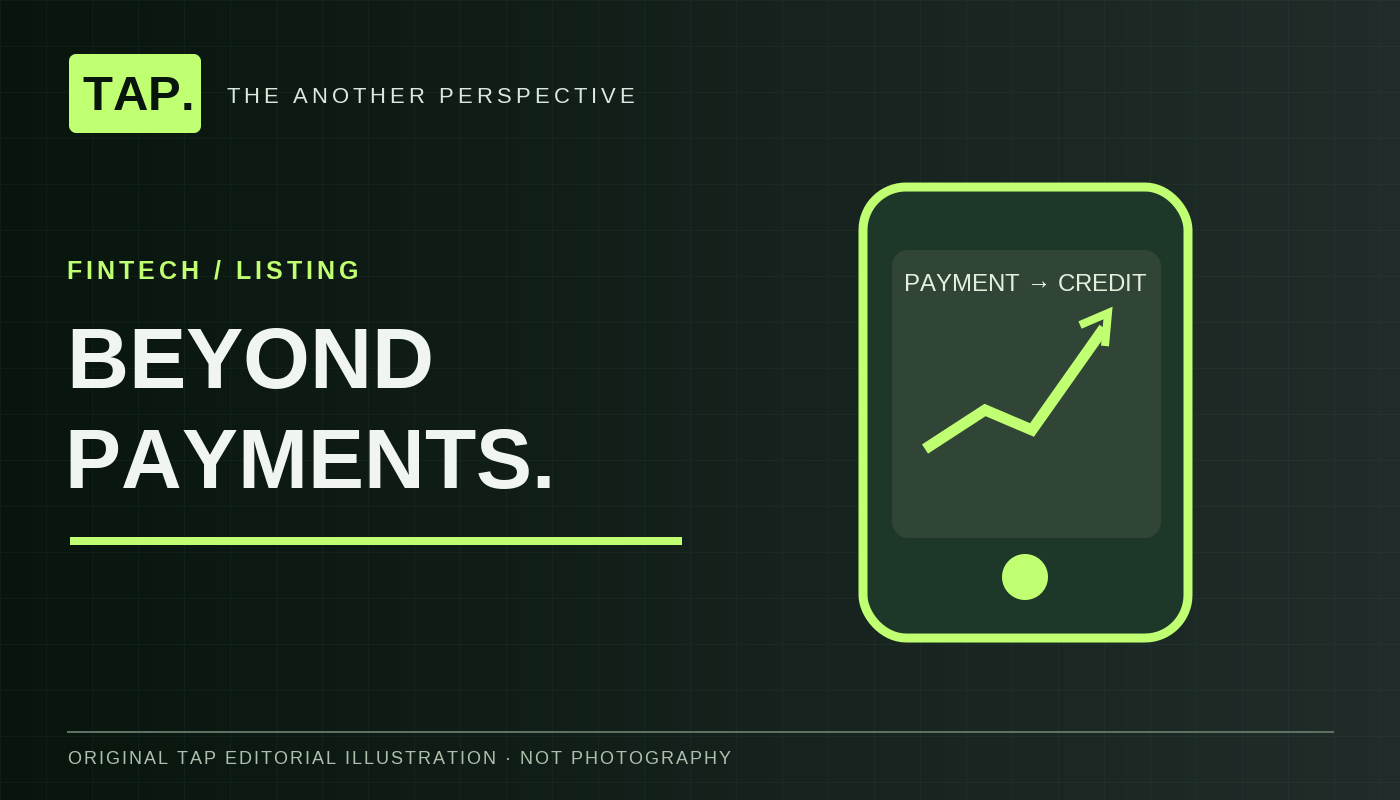
Original mobile-finance concept image. The line is illustrative and not OPay's valuation, shares or price data. · TAP original editorial artwork
A technology company that became familiar to millions through everyday transfers is trying to introduce itself to Wall Street. OPay, a Nigeria-focused financial technology business, has filed for a US stock-market listing and published an indicative offer range of $19 to $21 per American depositary share. Reuters reports the company could be valued at up to $4.42 billion.
The proposed transaction is not a completed IPO. It is an invitation to evaluate an increasingly important kind of emerging-market business: an app that may begin with fast, inexpensive payments and then extend its relationship with users into lending, savings and other financial products. The benefit to customers can be real, but each extra service creates a different set of risks.
Why a payments platform can become a broader bank-like business
Digital payments platforms can reach people who have limited access to conventional bank branches. They can also collect operational information about transfers, deposits and merchants. That may help a company deliver new services and offer credit to customers who previously found loans difficult to obtain through traditional channels.
However, processing payments and underwriting loans are not economically equivalent. A transfer service mainly depends on transaction volume, fees, operational reliability and fraud controls. Lending adds borrower defaults, collection practices, capital needs and the difficulty of assessing creditworthiness when household finances fluctuate. Investors should not treat revenue from both activities as carrying the same risk.
What the proposed Wall Street offer says and does not say
OPay's public SEC registration statement provides a more authoritative basis for understanding the business than a valuation headline alone. Reuters reports the proposed indicative price range and approximately 16 million American depositary shares. A top-end valuation in a deal announcement is still a proposed pricing outcome, not a figure the public market has accepted.
Even the transaction's size deserves careful reading. Sixteen million shares multiplied by $21 produces $336 million, while some reporting cites proceeds of up to $366 million. Those numbers may reflect different assumptions or components of an offering. They should not be treated as identical without checking the most recent underwriting and registration details.
What investors need to examine beyond user numbers
A large reported user base can demonstrate reach, but investors need to ask what those users actually do and how frequently. They also need to understand transaction margins, financing costs, regulatory obligations and loan performance. The number of people using an app is not the same as sustainable cash flow for its shareholders.
For an overseas listing, the structure of American depositary shares adds another layer. Investors purchase securities linked to shares in the issuing entity, while many customers and merchants operate in different local currencies and regulatory environments. Changes in exchange rates, financial rules and the cost of funding can all affect returns independently of the app's popularity.
The TAP perspective: inclusion and risk travel together
Financial inclusion is sometimes presented as a simple equation: more people with an app means more people served by the financial system. But access is only one measure. Credit terms, user protections, repayment obligations and the availability of meaningful alternatives are also part of the outcome.
OPay's proposed public listing is an opportunity to examine the trade-off honestly. A growing fintech may make money move more easily and make credit available to people previously excluded. The test is whether those products remain useful, affordable and resilient as the business becomes accountable to public-market investors who expect continued growth.