· 8 min read
What does the 1.5°C climate limit actually mean?
The 1.5°C target is not a temperature any single day or country must stay below. It refers to long-term global average warming above the pre-industrial climate. Crossing it temporarily and staying above it permanently are different problems.
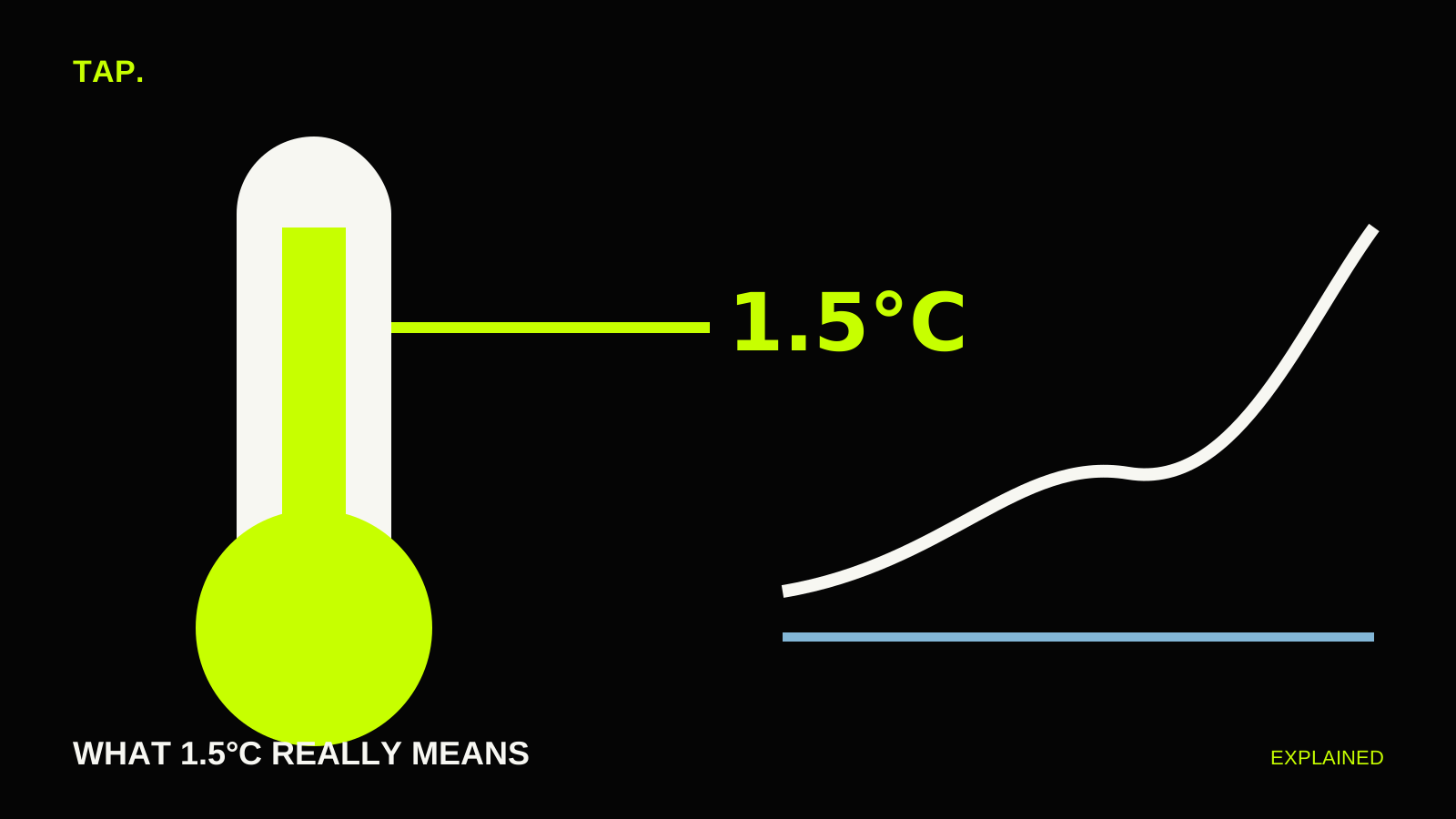
Fig. — A threshold, not a cliff edge.
Climate negotiations repeatedly return to one number: 1.5°C.
Pacific nations meeting ahead of COP31 warned this week that the world is moving dangerously close to, and may temporarily exceed, that level of warming.
The number is often misunderstood.
1.5°C compared with what?
The target refers to the rise in global average surface temperature compared with the pre-industrial climate, generally using a baseline around 1850–1900.
It does not mean every place on Earth becomes exactly 1.5°C warmer.
Land warms differently from ocean, the Arctic warms faster than the global average, and year-to-year weather can temporarily push individual regions far above or below the global trend.
It is a long-term climate measure
One month or even one year above 1.5°C does not by itself mean the Paris Agreement’s long-term temperature goal has permanently failed.
Scientists evaluate the threshold using sustained global warming over time.
Why 1.5°C matters if 1.6°C is not apocalypse
Climate risk does not behave like a trapdoor where everything is safe at 1.49 and catastrophic at 1.51.
The reason for the target is that risks rise as warming increases.
Higher warming increases the probability and severity of heat extremes, heavy rainfall, drought in some regions, ecosystem loss and long-term sea-level rise.
What is overshoot?
Overshoot means global temperatures rise above a target level and are later brought back down.
That would require global net carbon dioxide emissions to reach roughly zero and, for a significant overshoot, likely require removing additional carbon dioxide from the atmosphere.
The word can sound reassuring, as if the climate simply returns to its previous state afterward.
It does not.
Some consequences are not fully reversible
Sea level responds slowly because oceans absorb heat and ice sheets take time to adjust.
Even if temperature later declines, some ice loss, ecosystem damage and sea-level commitment may persist for centuries or longer.
That is one reason Pacific island nations are so focused on minimizing the amount and duration of any overshoot.
Why every fraction matters
If 1.5°C becomes impossible to avoid temporarily, that does not make 1.6, 1.8 or 2°C equivalent.
Each additional fraction of warming increases risks and makes adaptation more difficult.
The useful way to think about the target is therefore not as a pass-or-fail exam but as a risk boundary the world is trying to stay as close to as possible.