· 8 min read
Why is cheap long-haul flying so hard to make profitable?
Norse Atlantic is flying with reduced capacity as jet-fuel prices squeeze its economics. The problem is broader than one airline: long-haul flying combines expensive aircraft, volatile fuel, thin margins and fewer ways to recover when something goes wrong.
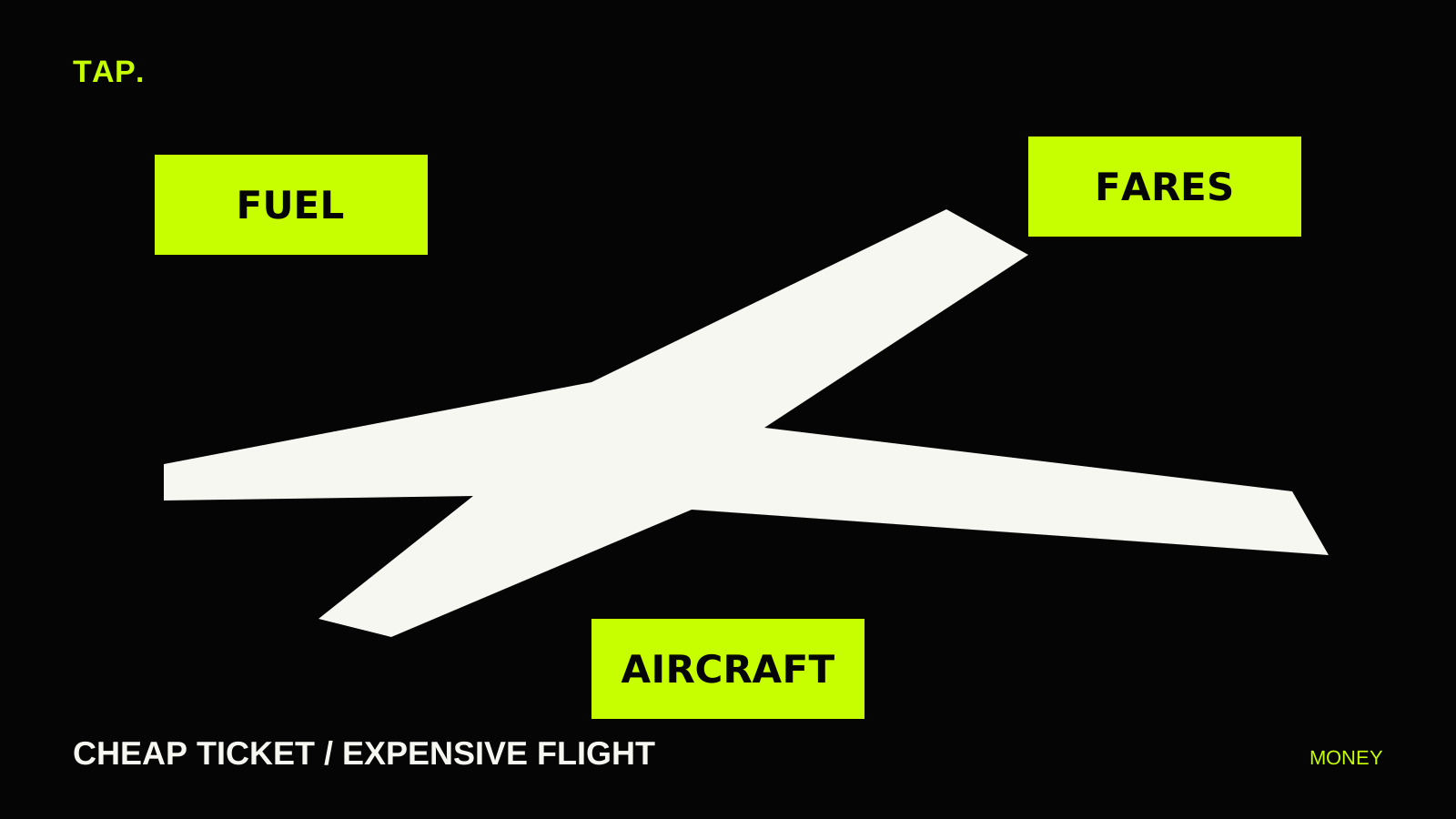
Fig. — Long distance magnifies every cost.
The low-cost airline formula works beautifully on many short routes: keep aircraft flying, use a simple fleet, charge separately for extras and spread fixed costs across lots of passengers.
Long-haul flying breaks several parts of that formula.
Norse Atlantic Airways is a current example. Reuters reported that the carrier kept capacity reduced in September as high fuel prices weighed on the business, even while its load factor reached 96.9%.
A full aircraft can still lose money
Load factor tells you how many seats are occupied. It does not tell you whether each passenger paid enough to cover the flight.
An airline can fill almost every seat with low fares and still lose money if fuel, leasing, crew, airport and financing costs are too high.
Fuel becomes a bigger problem over long distances
The farther an aircraft flies, the more fuel becomes a dominant part of the trip economics.
Fuel prices are also volatile. Airlines can hedge some future fuel needs, but hedging costs money and does not eliminate every risk.
Reuters noted that Norse is particularly exposed because it does not hedge its fuel needs.
Wide-body aircraft are expensive assets
Long-haul airlines need aircraft capable of flying thousands of kilometres with large fuel loads and enough crew for lengthy duty periods.
Those aircraft are expensive to lease or finance. If demand weakens, the airline cannot easily move every aircraft to a profitable two-hour route.
Low-cost carriers have fewer high-margin passengers
Traditional network airlines can sell business-class seats, premium cabins, corporate contracts and connecting itineraries through large hubs.
Those customers can subsidize the economics of the rest of the aircraft.
A low-cost long-haul airline often depends more heavily on leisure passengers, who are highly sensitive to price and can delay travel when fares rise.
Irregular operations get expensive fast
A delayed short-haul flight may disrupt one aircraft for part of a day.
A long-haul cancellation can strand hundreds of passengers far from the airline’s base, require hotels and rebooking, and leave a wide-body aircraft out of position.
A small carrier has fewer spare aircraft and alternative flights available to recover.
Why the idea keeps coming back
The demand is real. People want cheaper intercontinental travel, and modern aircraft are more fuel-efficient than older generations.
The challenge is keeping enough margin between the fare passengers will pay and a cost base that can move violently with fuel, exchange rates and financing.
Low-cost long haul is therefore not impossible. It is simply unforgiving.