· 8 min read
Rich people can get richer while luxury brands still sell less.
Citi credit-card data showed U.S. luxury purchases down 6% year over year in September, even as top-end wealth remained resilient. The reason is that wealth, confidence, value perception and willingness to spend are not the same thing.
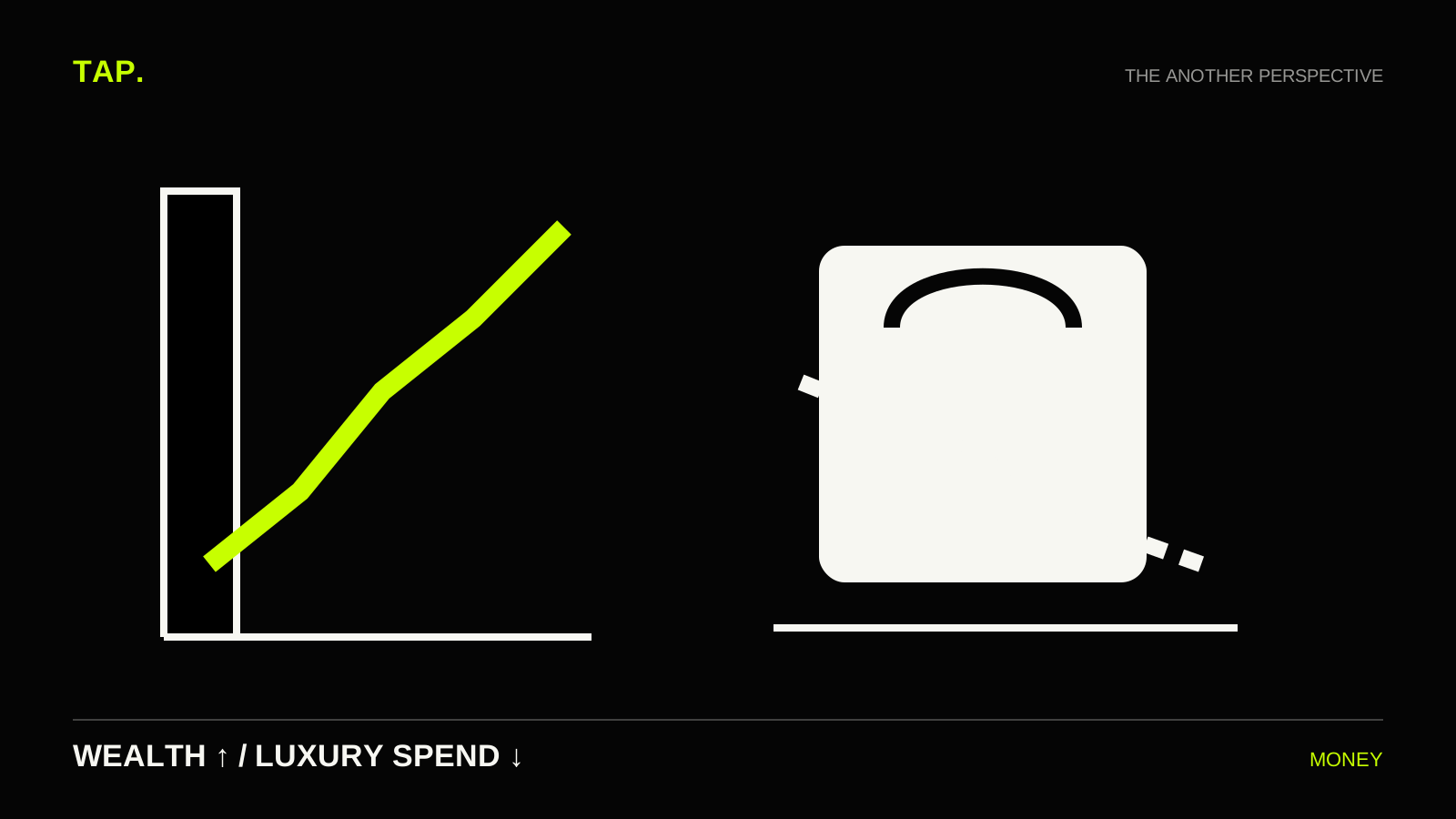
Fig. — Wealth and spending can move in different directions.
Luxury companies often rely on a comforting assumption: wealthy customers are less sensitive to economic pressure.
That is true up to a point. It is not the same as saying rich consumers spend automatically.
Citi credit-card data cited by Reuters showed U.S. luxury purchases falling 6% year over year in September after declines in July and August.
6%
Year-over-year decline in U.S. luxury credit-card purchases in September, according to Citi data reported by Reuters
Wealth is not the same thing as willingness to spend
A household can have a rising portfolio and still become cautious.
Political uncertainty, high borrowing costs, war, fears about future income or a sense that prices have become unreasonable can all reduce discretionary purchases without making the buyer poor.
Luxury also competes with other forms of luxury
A wealthy consumer does not have to choose between a designer bag and nothing.
The money can move toward travel, restaurants, wellness, property, private experiences, jewelry or simply remain invested.
Reuters has reported luxury executives discussing a shift toward wellness, health, longevity, hotels and restaurants.
Price increases changed the value equation
Luxury brands spent years raising prices aggressively.
Higher prices can protect margins and reinforce exclusivity, but they also force customers to ask whether the product is still worth the premium.
That matters even for wealthy shoppers because luxury is partly emotional. A purchase that feels special can survive a high price. A purchase that feels routine but expensive is easier to postpone.
The top of the market behaves differently
Citi's data suggested the very highest-end consumer remained more resilient than the broader luxury buyer.
That creates a two-speed market: brands with access to ultra-wealthy clients can perform differently from brands that expanded by selling expensive products to aspirational middle- and upper-middle-income consumers.
Why this matters for brands
A luxury downturn is not solved simply by waiting for stock markets to rise.
Brands need cultural relevance, product desirability and a reason for the customer to choose physical goods over other experiences.
The TAP perspective is that wealth creates capacity to spend. It does not create desire.