· 9 min read
Want to be cited by AI Search? Start by publishing something worth citing.
There is no guaranteed switch that makes a page appear in AI answers. Google’s own guidance points to a less glamorous strategy: original information, crawlable pages, clear structure, strong images, real sourcing and normal SEO fundamentals.
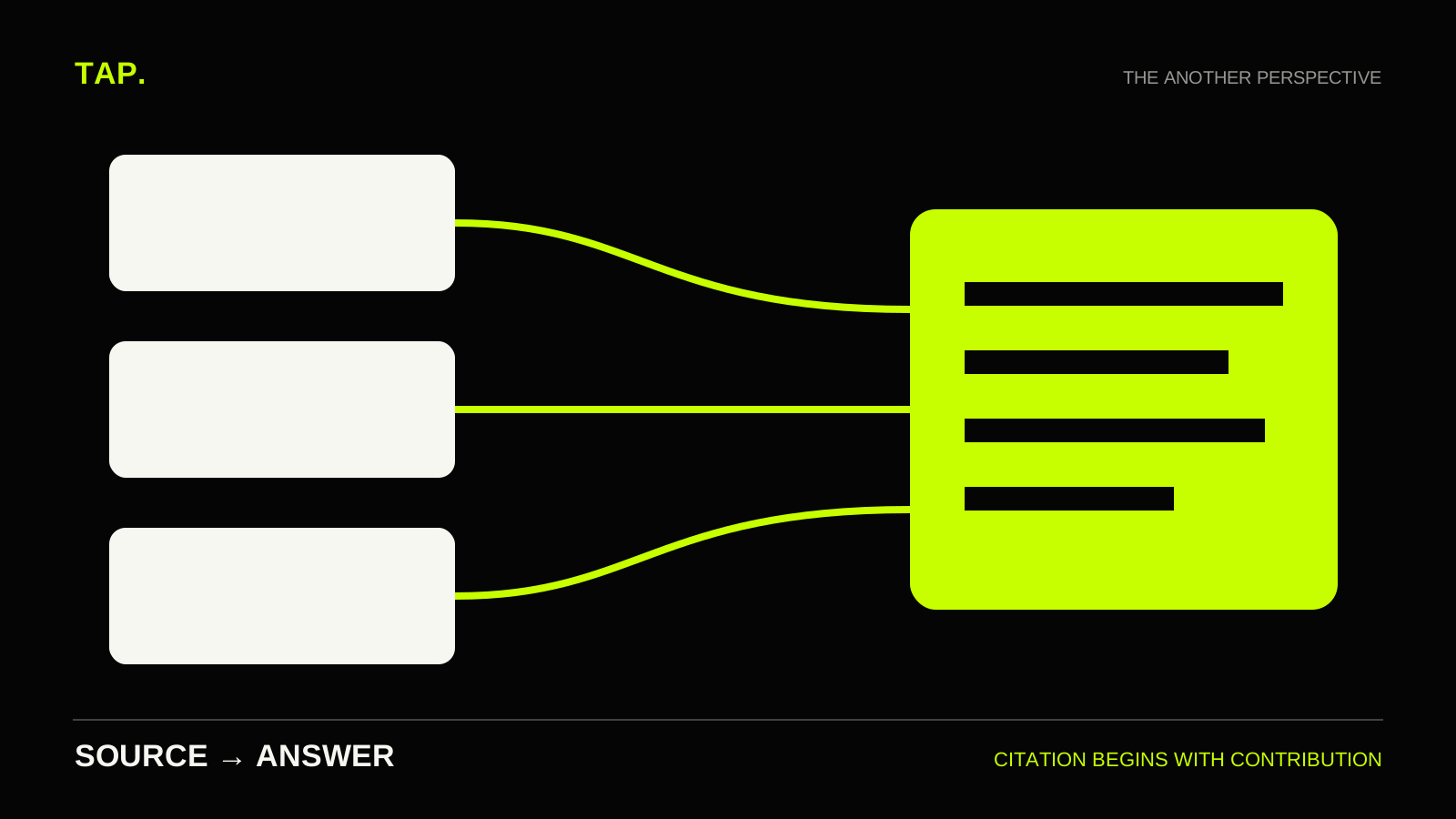
Fig. — Citation begins with contribution.
There is a growing market for advice that promises to make a website 'show up in ChatGPT' or 'rank in AI answers.'
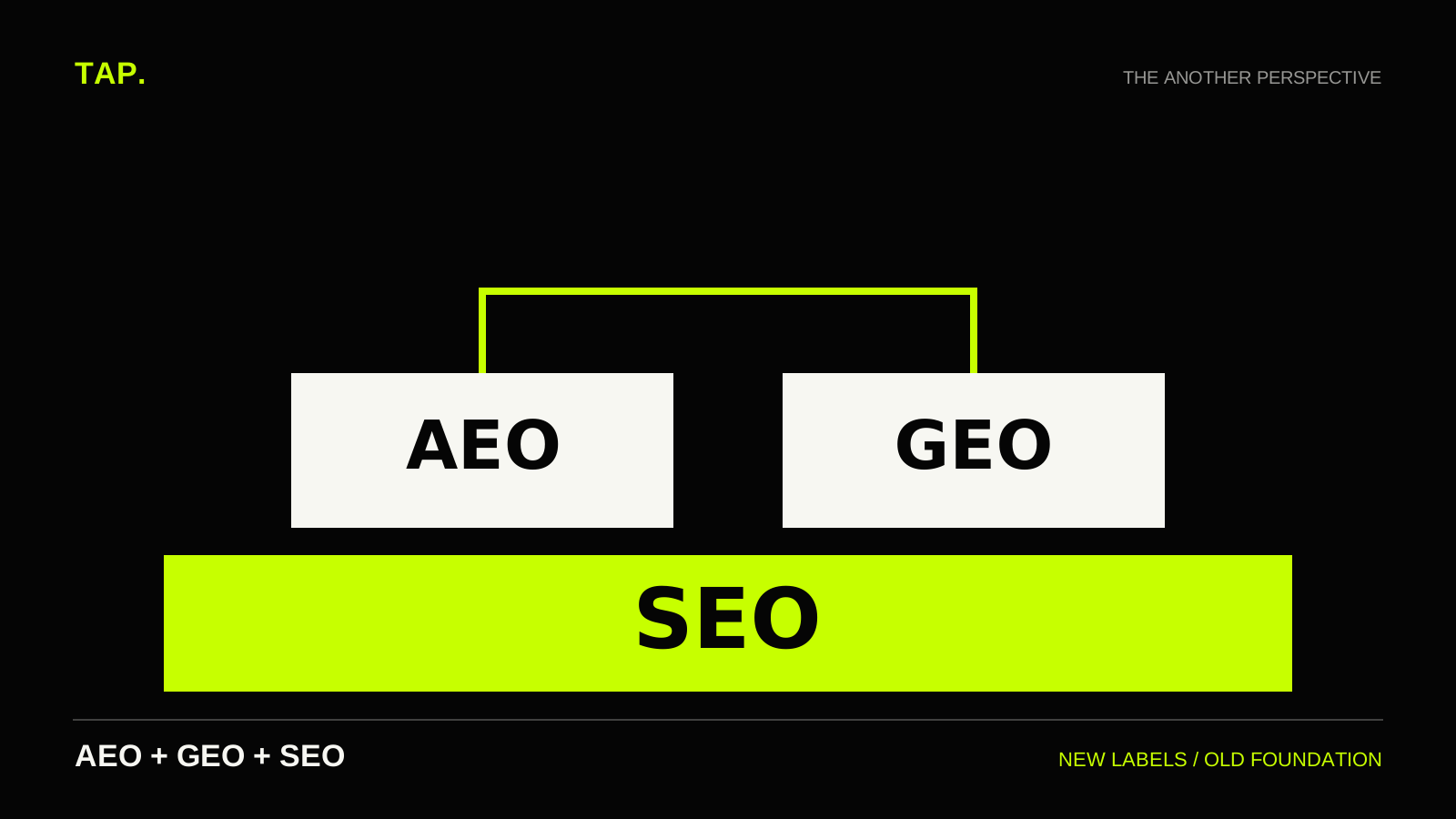
Some of that advice is sensible. Some of it is old SEO with a new label. Some of it is impossible to verify.
Google's own documentation gives site owners a useful baseline because it explains what its generative Search features actually rely on.
First: there is no guaranteed citation button
Google does not guarantee crawling, indexing, ranking or inclusion in AI features even when a page follows every guideline.
That matters because any service promising guaranteed AI citations is claiming control it does not have.
Be eligible for normal Search first
To appear as a supporting link in AI Overviews or AI Mode, a page generally needs to be indexed and eligible to appear in Google Search with a snippet.
That means basic technical SEO still matters: crawlable pages, sensible canonical URLs, useful internal links, mobile-friendly rendering and important text that search systems can access.
Publish information that is not interchangeable
Google's 2026 AI-search guidance repeatedly emphasizes non-commodity content.
A generic summary of a topic can be recreated almost anywhere. Original reporting, first-hand testing, primary data, an expert explanation, a unique comparison or a well-supported point of view gives the system a reason to select one source over another.
This is the part many 'GEO hacks' skip. If a page contributes nothing distinct, perfect formatting cannot manufacture distinctiveness.
Make facts easy to inspect
Clear writing helps humans first, but it also reduces ambiguity for retrieval systems.
Use descriptive headings. State important numbers with their unit and context. Name the organization, product, person or place explicitly rather than forcing the reader to infer it. Link to primary sources when possible.
If a claim is time-sensitive, show the date. If a statistic can change, say what period it describes.
Use images when the image actually adds information
Google explicitly recommends high-quality, relevant images and video as part of generative AI Search optimization.
That does not mean adding decorative stock images to every article. A chart, diagram, product image, map or original illustration can create another useful search surface and make a complicated idea easier to understand.
Image alt text should describe what is actually visible and why it matters, not repeat a keyword ten times.
Build a cluster, not a pile
Internal links help search systems discover how pages relate to each other.
A useful topic cluster has different jobs for different pages: one broad explainer, one deeper technical article, one current development, one original analysis and perhaps a data page. That is different from publishing 40 near-duplicate pages targeting tiny keyword variations.
Do not overrate special files or schema
Google says llms.txt does not help visibility in Google Search and there is no special schema.org markup required for AI Overviews or AI Mode.
Structured data still matters when it truthfully describes the page and qualifies the page for established rich results. It is not a secret AI-citation signal.
Measure what Google actually gives you
Google rolled out dedicated generative AI performance reporting in Search Console in 2026. That gives site owners a better way to see impressions from AI-powered Search experiences instead of relying entirely on third-party guesses.
The broader lesson is simple: optimize the source before optimizing the citation.
A useful citation is a side effect of having something useful to cite.